
How to Create a High-Converting Landing Page (Adfloats 2026 Guide)
Meta & SEO Brief for This Article
- Meta Title: How to Create a High-Converting Landing Page in 2026 | Adfloats Guide
- Meta Description: Learn how to create a high-converting landing page that boosts lead generation, lowers ad costs, and increases conversion rate. Adfloats shares a practical 9-step framework, real examples, and proven landing page templates for SEO, Google Ads, and social campaigns.
- Focus Keywords: high-converting landing page, create a landing page, landing page design, key elements of a landing page, landing page templates, landing page builder, effective landing page, landing pages for lead generation, Adfloats digital marketing training
- Permalink Structure: /blog/how-to-create-a-high-converting-landing-page/
- This article is written from the perspective of Adfloats, a digital marketing agency and training provider (B2B/B2C, India-focused but globally relevant), current year 2026.
Introduction: Why Landing Pages Decide Your Campaign ROI
Every marketing campaign ends at a page. The question is whether that page is built to convert or built to confuse. A landing page is a standalone web page created for a marketing campaign – a destination page designed around one specific action, like “Enroll in our July 2026 SEO course” or “Book a Google Ads audit.” In 2026, with CPCs rising across Google Ads, Meta Ads, and LinkedIn, an effective landing page is the difference between profitable campaigns and wasted budget. They lower the cost of acquiring leads and sales by focusing every element on a single outcome.
For Adfloats clients, switching from sending ad traffic to a generic homepage to focused destination pages has often doubled or tripled conversion rates. This guide is actionable for business owners who need to brief agencies, and equally useful for students and professionals learning digital marketing and UX.
Here’s what you’ll walk away with:
- A clear understanding of what separates a landing page from a homepage
- The key elements every high-converting page must include
- A reusable 9-step framework to create a landing page for any campaign – courses, services, SaaS trials, or events
- Practical templates, testing strategies, and traffic tactics you can apply this week
What Is a Landing Page? (And How It Differs from a Homepage)
A landing page is a standalone web page created for a specific marketing campaign or traffic source with one primary call to action. The primary purpose of a landing page is to drive a specific action – not to educate broadly or guide visitors through an entire site. Landing pages improve conversion rates by focusing on a single goal, removing anything that competes with that goal.
Concrete examples:
- “Sign up for Adfloats’ 6-week Digital Marketing Bootcamp starting July 2026”
- “Download our 2026 B2B Lead Generation Playbook PDF”
- “Request an SEO proposal for your ecommerce store”
How this differs from a homepage:
- A homepage serves to inform and guide users through a website. It contains multiple links and distractions – About, Blog, Careers, Services – suitable for exploration, not immediate conversion.
- Landing pages focus on a single goal, unlike homepages. They typically have no navigation menus to reduce distractions, keeping landing page visitors focused on one action.
- Landing pages usually receive traffic from specific sources: a Google Ads campaign, Meta Ads, a June 2026 email nurture sequence, or a webinar replay link.
- Because everything unnecessary is removed, performance is easy to measure. Visitors either convert or leave – and you know exactly which element to improve next.
Key Elements of a High-Converting Landing Page
Landing pages are designed to maximize conversion rates effectively. But not all pages are created equal. A study of 5,000+ landing pages by Landy AI found that pages applying all core design principles convert at 10–15%, while those missing even two average under 3%. The global median conversion rate across 50,000 landing pages sits at roughly 2.35%, according to a recent benchmark report.
Here are the essential components that make a successful landing page:
- Headline and subheadline
- Hero section and above-the-fold layout
- Benefit-focused copy and value proposition
- Clear call to action (CTA)
- Lead form or checkout button
- Visuals – hero image, video, or product screenshots
- Social proof and trust elements
- FAQ and objection handling
- Closing section and final CTA
Each element must align with the traffic source. If your Google Ads campaign promises “Free SEO Audit,” the landing page headline must echo that exact promise. Landing pages feature tailored design and copy for specific ads or marketing campaigns – that consistency is what separates a well designed landing page from a generic one. At Adfloats, we use this same checklist for both client campaigns and internal course enrollment funnels. For mobile-first audiences common in India and SEA in 2026, elements above the fold are especially critical to grab attention within 3–5 seconds.
Headlines and Subheadlines
A clear and compelling headline grabs attention immediately. Key elements of an effective landing page include a compelling headline and a clear value proposition – these two elements alone can make or break your page.
- The main headline must restate the offer and outcome. Example: “Master Google Ads in 6 Weeks – Live Online from July 15, 2026.”
- Keep headlines under 10–12 words. Align them tightly with ad copy and primary keywords for both relevance and SEO.
- The subheadline clarifies who the page is for: “For marketers and founders who want to cut CPA by 30% in 90 days.”
- Test different headline angles: outcome-focused, time-bound, risk-reversal, or specificity (e.g., “Get 50+ Proven Landing Page Templates for 2026 Campaigns”). Tested headline changes often yield 30–40% lifts.
Hero Section and Above-the-Fold Layout
The hero section is where most user attention goes initially. Mobile responsiveness is crucial as a significant portion of traffic comes from mobile devices – in 2026, 60–70% of paid search and social traffic arrives on a smaller screen.
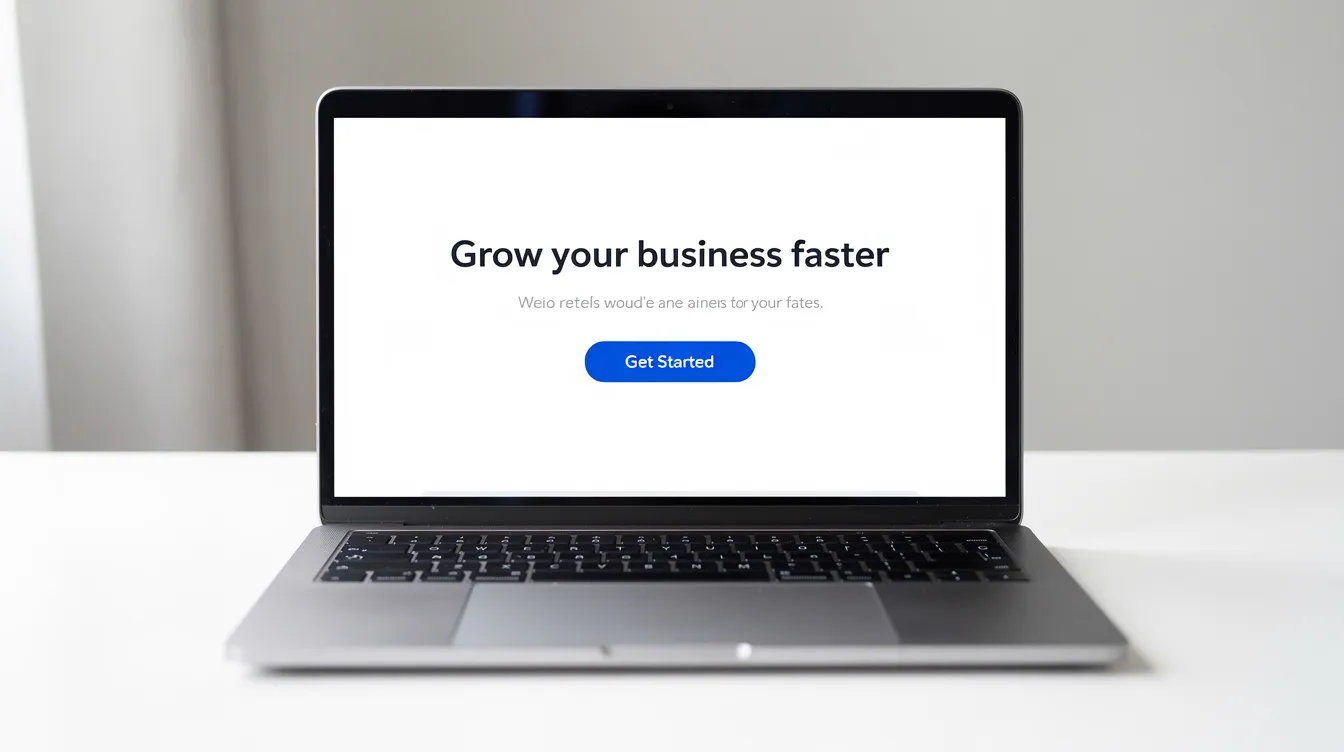
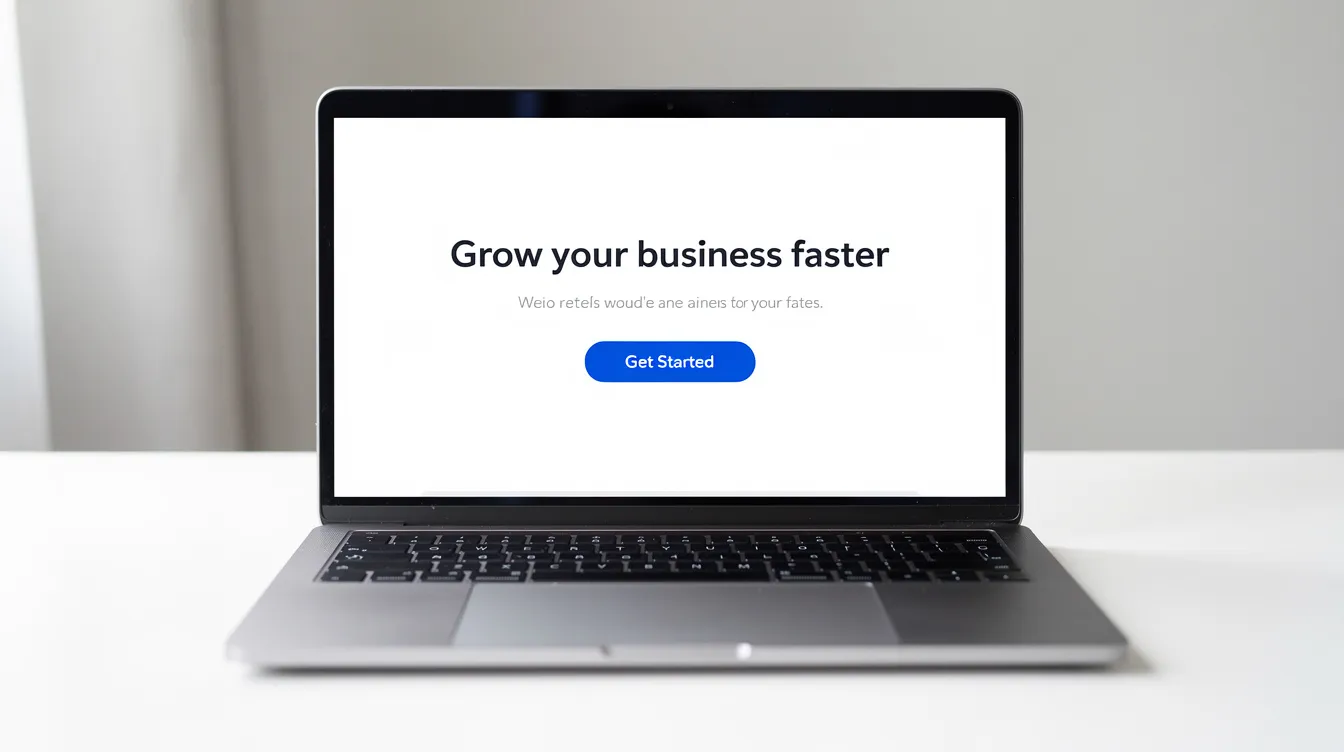
- Above the fold, include: main headline, subheadline, one clear CTA button, and optionally a short form or key visual.
- Use a clean landing page design with generous white space, a single brand color for the primary CTA, and minimal distractions.
- Add a concise bullet list (3–5 bullets) of key benefits right below the hero headline.
- For B2B, include a subtle trust element: client logos, “Trusted by 120+ SMEs in India, UK, and UAE as of 2026,” or recognizable logos of tools and partners.
Benefit-Focused Copy and Value Proposition
Landing pages should highlight user benefits over feature lists to drive engagement. Features only matter when they translate into outcomes the visitor cares about.
- Transform features into outcomes: “4 live projects” becomes “Publish 4 real campaigns you can show in interviews by August 2026.”
- Organize benefits into 3–5 bullets grouped by themes: “Save Time,” “Increase Revenue,” “Get Hired Faster.”
- For training pages, emphasize job placement assistance, certifications, and practical portfolios – these are the core value props for students and job seekers.
- For agency service pages, focus on measurable metrics: “Reduce cost per lead by 25% within 60 days” or “Rank on page 1 for 10+ target keywords.” Landing pages enable targeted messaging for specific audiences – use that power.
Calls to Action (CTAs)
Landing pages typically have a single call to action. One consistent primary CTA reduces confusion. Multiple competing CTAs lead to choice paralysis.
- Define the primary CTA: “Enroll Now,” “Book Free Strategy Call,” or “Get the Landing Page Checklist.” Use the same label consistently.
- Landing pages should have a strong call to action above the fold, then repeat it after benefits, social proof, and FAQ sections.
- Use high-contrast colors for CTA buttons aligned with your brand palette. Avoid ghost buttons for primary actions on mobile – a mobile friendly design demands tappable, visible buttons.
- Test microcopy that reduces friction: “Get Syllabus PDF (1 min)” or “Book Free 30-Min Audit – No Credit Card.”
Forms, Lead Capture, and Checkout Elements
Forms on landing pages should request only essential information. Data shows that reducing form fields from five to three can improve submission rates by 18–20% per field removed.
- Keep lead capture pages to 3–5 fields: Name, Email, Phone, Role/Business type. Move advanced questions to follow-up stages.
- Use two-step opt-ins where appropriate – click CTA, then show pop-up form – to improve perceived commitment and conversion rate.
- Include clear labels, input validation, and visible privacy statements: “We never share your data. Used only for course and service updates.”
- For paid course enrollments, place secure payment badges and concise pricing breakdowns near the checkout flow to reassure visitors about security.
Visuals, Media, and Design Inspiration
High-quality visuals enhance landing page effectiveness and the overall message. They should support comprehension and trust – not distract. High-quality visuals enhance the message and highlight key benefits when chosen deliberately.
- Include short product or course preview videos (60–120 seconds) showing the dashboard, live sessions, or campaign results. Avoid abstract animations.
- Use real classroom screenshots, Zoom session captures, or analytics dashboards from 2024–2026 campaigns as visual proof.
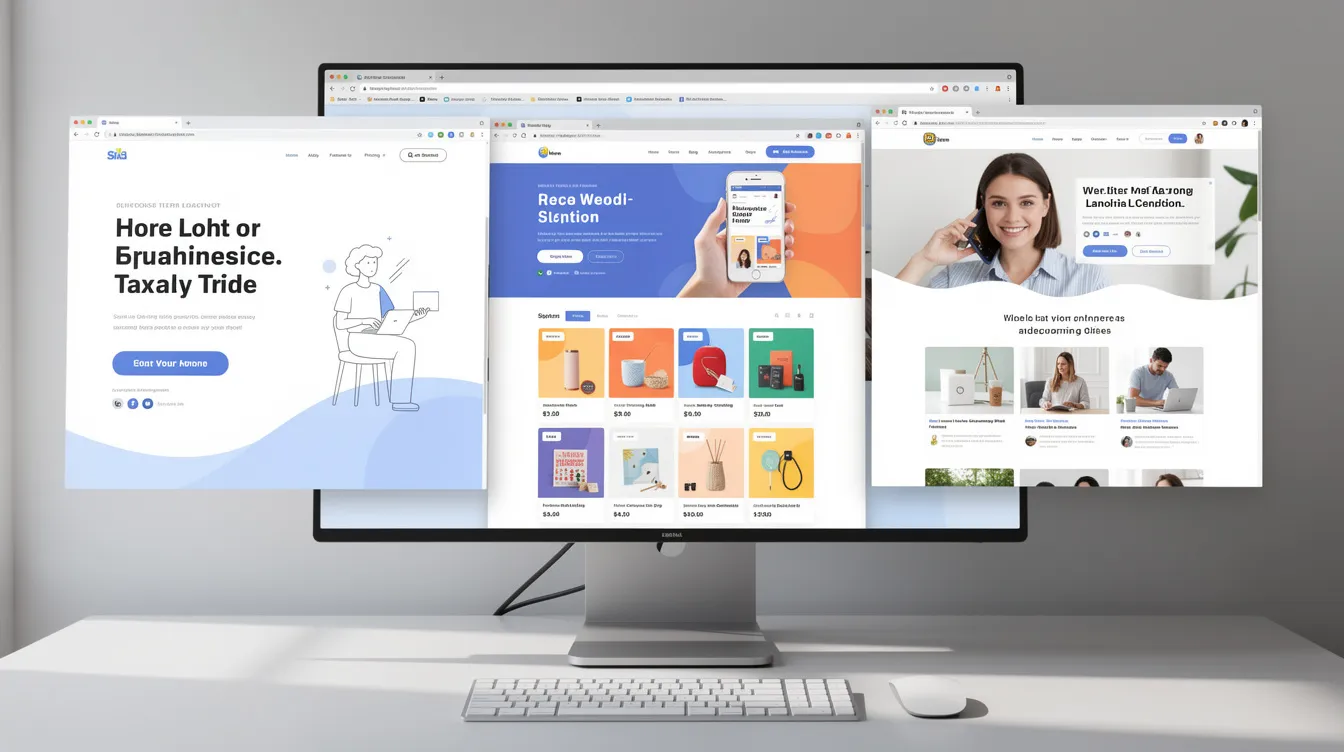
- For a “landing page templates” offer, show specific template thumbnails in a simple grid as design inspiration.
- Avoid heavy animations that slow page load on 4G connections. Use lazy loading, WebP formats, and static image placeholders with play overlays for video.

Social Proof, Case Studies, and Trust Elements
Social proof builds credibility and reassures visitors on landing pages. Trust signals such as testimonials enhance credibility – especially for cold traffic from Google Ads and LinkedIn where visitors don’t know your company yet.
- Include 3–5 short testimonials with names, roles, and companies. For training, add outcomes: “Got PPC role at Bangalore agency in March 2026.”
- Use 1–2 concise case studies with metrics: “Increased ecommerce ROAS from 2.1 to 4.3 in 90 days using Adfloats’ Google Ads and landing page optimization.”
- Add trust badges: Google Partner, Meta Business Partner, completion certificates, or placement stats like “100% placement assistance since 2022.”
- Place some proof under the hero to earn trust early, and deeper proof near the CTA to reassure visitors who are late-stage decision makers.
FAQ and Objection-Handling Section
A well-structured FAQ block reduces friction for visitors who scroll the entire page before deciding to take the desired action.
- Is this suitable for beginners in 2026? Yes – the curriculum starts from fundamentals and builds to advanced campaign management.
- How soon will I see ROI from a new landing page? Most clients see measurable improvements within 2–4 weeks of launching an optimized page.
- Do you offer EMI or payment plans for students? Flexible payment options are available. Details are shared after enrollment inquiry.
- Can you work with our in-house dev team? Absolutely – Adfloats collaborates with internal teams on design briefs, copy, and technical implementation.
Place FAQs near the final CTA. Include at least one question on logistics (timelines, access duration) and one on guarantees or support. Well-written FAQs can also capture long-tail search traffic for queries like “how many landing pages should I have for Google Ads campaigns in 2026.”
Closing Section and Final CTA
The final block should be a short recap, urgency reminder, and a single prominent CTA. This is where you encourage users to commit.
- Summarize the core promise in 2–3 lines and restate who this is for: “For founders, marketers, and students who want results in 60–90 days.”
- Use subtle urgency based on real constraints: “Next cohort starts 1 August 2026 – seats limited.”
- Keep only one primary CTA visible here. Avoid secondary links like “Learn More.” This keeps visitors focused on the single action that matters.
- Repeat key trust markers – money-back terms, placement support, or “No long-term contracts” – to reassure visitors near the closing CTA.
Types of Landing Pages You Should Use in 2026
Different campaign goals need different landing page flows. Increasing landing pages from 10 to 15 can boost leads by 55% – landing pages can increase leads by 55% when adding more pages because each page targets a tighter segment with specific messaging.
At Adfloats, we map at least one landing page per major funnel stage: awareness (content), consideration (webinar), decision (consultation or enrollment page). Having multiple specialized capture pages helps customize messaging for different groups – students, job seekers, freelancers, and SME founders.
Lead-Generation Landing Pages
Lead gen landing pages focus on form submissions: “Get the Detailed Syllabus,” “Download 2026 Digital Marketing Salary Report,” or “Claim Free 30-Min Growth Call.”
- Use short copy, one strong visual, a few bullets on value, and a compact form above the fold. Add deeper content below for skeptics.
- Deploy these for cold traffic from Google Ads, LinkedIn sponsored content, and top-of-funnel social media posts.
- Follow-up flows – email sequences, WhatsApp messages, or sales calls – are part of the lead gen landing pages strategy. The page is step one, not the full funnel.
- These pages are ideal for generating leads and building your pipeline for short term campaigns and ongoing marketing efforts alike.
Click-Through and Sales Landing Pages
Click-through pages act as a bridge between an ad and a checkout flow, especially for courses and retainers. They encourage readers to learn more before committing.
- Structure: hero with offer, benefits, curriculum or service breakdown, instructor or team section, testimonials, pricing, FAQ, and final “Enroll Now” CTA.
- For high-ticket services (SEO retainers, premium packages), the CTA may be “Book Strategy Call” with calendar integration – making sales simpler for B2B buyers.
- Include guarantee or risk-reversal statements: “Cancel any time with 30-day notice” or “First class free for July 2026 cohort.”
- Clarity in pricing and deliverables reduces back-and-forth and builds trust for ecommerce brands and service buyers evaluating agencies across specific industries.
Webinar and Event Landing Pages
These pages serve online workshops, masterclasses, or offline bootcamps – a good portion of Adfloats’ lead generation comes from events.
- Essential elements: event title, date and time (including time zone), agenda bullets, speaker bios with photos, target audience, and a clear “Save My Seat” CTA.
- Include calendar add-to buttons (Google Calendar, Outlook) on the thank-you page to reduce no-show rates.
- Use countdown timers only when based on real event dates. Fake urgency damages trust.
- These pages can later be repurposed as “Replay” pages for product launches with a recording embed and CTA to enroll in related paid programs.
Content and Resource Landing Pages
These are gated or ungated resource pages created for SEO and lead nurturing – for example, a “Landing Page Checklist 2026 PDF.”
- Gate content when it’s highly specific and updated, used in ongoing nurture campaigns. Leave it ungated for SEO reach and link building.
- Target informational queries like “landing page templates for Google Ads in 2026” to attract search traffic organically.
- Include a short description, preview screenshots, a list of what’s inside, and a simple form or download CTA. These pages provide essential information without overwhelming the visitor.
- Resource pages feed warm leads into course enrollment funnels – they’re the bridge between awareness and decision for potential customers.
Step-by-Step: How to Create a Landing Page That Converts
Here’s the practical framework Adfloats uses to build landing pages for every marketing campaign – from training enrollments to agency lead-gen.
- Define your single conversion goal. Example: “50 webinar signups by 20 July 2026” or “20 consultation bookings per month for SEO services.” One page, one goal.
- Map your audience and traffic source. Students from Instagram need different messaging than B2B founders from LinkedIn or job seekers from Naukri campaigns. Align the copy to the visitor’s intent and context.
- Choose a landing page builder or stack. WordPress + Elementor, Webflow, Unbounce, or an in-house system – pick based on your team’s skills and launch timeline. A good landing page builder should support A/B testing, mobile previews, and email tool integration.
- Start from a suitable template. Pick a landing page template matching your goal (lead-gen, click-through, event) and adapt it to your brand style and colors.
- Write core copy first. Headline, subheadline, benefits, offer breakdown, FAQ – write these before designing. Treat design as a way to emphasize the words, not replace them.
- Add visuals and social proof. Course screenshots, dashboards, testimonials, logos – focus on authenticity and recency (2024–2026 examples).
- Configure forms, thank-you page, and automation. Welcome emails, webinar reminders, or call booking flows via Calendly or similar tools.
- Ensure mobile optimization and speed. Compress images, minimize scripts, and target Largest Contentful Paint under 2.5 seconds. Add basic SEO: meta tags, focus keyword usage, clean URL, schema where relevant. Responsive layouts are non-negotiable.
- Launch a small test campaign. Run limited budget on Google Ads or Meta Ads to collect initial data, then iterate based on behavior and conversions. Don’t wait for perfection – launch, measure, improve.

Using Landing Page Templates and Builders Effectively
You don’t need to create landing pages from scratch every time. Templates give you a proven structure, but they still need custom copy, branding, and offers to match your tone and goals. A template without your voice is just a pretty shell.
- Maintain a private library of 3–5 core templates: one for courses, one for service audits, one for webinars, and one for downloadable resources.
- A good landing page builder should support A/B testing, mobile previews, fast editing, and integration with email tools and analytics.
- Document “winning” template variations from successful landing campaigns (e.g., a January 2026 Google Ads bootcamp page that hit 12% conversion) and reuse those layouts.
- Build landing pages faster by starting from what already works, then adapting for the specific offer.
Customizing Templates for Different Audiences
You can adapt one base template for multiple segments without rebuilding the structure.
- Change hero headlines, examples, testimonials, and FAQs to target people in each segment: students, freelancers, marketing managers, founders, or HR teams.
- For students and job seekers, emphasize certificates, projects, and placement assistance. For SMEs, emphasize ROI, reporting, and communication cadence.
- Maintain separate variants tuned to different geographies (India, Middle East, UK) where Adfloats serves clients. The target audience shifts – the structure stays.
- This approach lets you deploy dozens of aligned pages while keeping brand consistency and development overhead low. Use landing page templates as a starting point, not a final destination.
Driving Quality Traffic to Your Landing Pages
Even the best landing page design fails without the right traffic. At Adfloats, we use an integrated approach to drive traffic: SEO, Google Ads, social media ads, organic social, and email marketing.
Each channel requires matching messaging on the landing page to maintain relevance and maximize results. Quality matters more than volume: 100 targeted visitors from a well-built Google Ads campaign can outperform 1,000 random clicks from viral posts. This is the foundation of any marketing strategy that works.
SEO and Organic Search Traffic
SEO requires ongoing effort to maintain high search rankings, but it delivers compounding returns.
- Conduct keyword research for terms like “landing page design inspiration 2026,” “Google Ads landing pages for SMEs,” or “digital marketing course landing page.”
- Optimize meta title, meta description, H1, and H2s to include keywords naturally. Well-optimized landing pages ranking in the top 5 for commercial keywords see CTRs of 5–7% and time-on-page of 2–4 minutes.
- Link from relevant blog posts (SEO guides, Google Ads tutorials, AI in marketing articles) to these landing pages to strengthen authority with search engines.
- Some pages stay primarily ad-focused, but supporting SEO pages still collect organic search traffic over time.
Google Ads and Paid Search
Paid search ads can significantly increase landing page traffic when ad copy and page content are aligned.
- Each ad group or keyword theme (e.g., “Google Ads course online,” “landing page optimization service”) should have its own matched landing page.
- Use ad copy phrases verbatim in the landing page headline and first paragraph to improve Quality Score and reduce CPC.
- Track conversions via Google Ads and GA4 events – tag form submissions, calls, and enrollments to measure performance per keyword. They provide measurable metrics for campaign performance analysis.
- Exclude broad, low-intent keywords that bring unqualified traffic. Increasing conversion rates starts with sending the right people to the right page.
Social Media Ads and Organic Social
Social media ads target specific demographics to drive traffic – career growth on Instagram for younger audiences, ROI and case studies on LinkedIn for decision-makers.
- Social traffic lands best on visually strong, story-driven landing pages that quickly recap the ad promise at the top. Guide visitors from the creative to the conversion point with a consistent narrative.
- Use retargeting ads to bring back visitors who didn’t convert, with modified creatives acknowledging their previous visit.
- Use UTM parameters for all social traffic to attribute signups correctly. Pair these with organic social media posts that link to the same pages.
- For lifestyle brands and training offers, Instagram and YouTube Shorts can drive significant awareness traffic to well-crafted destination pages.
Email Marketing and Remarketing Sequences
Email marketing has a projected reach of 4.6 billion users by 2025, and it remains one of the highest-converting traffic sources for landing pages.
- Build short email sequences (3–7 emails) directing readers to the same landing page from different angles: success stories, FAQs, objections, or bonus offers. Encourage readers to revisit the page with fresh context.
- Use personalized subject lines referencing the specific lead magnet or event the subscriber signed up for.
- Remarketing emails after cart abandonment or incomplete enrollment can link to a simplified or incentive-enhanced version of the original page.
- Email traffic usually converts at higher rates than cold paid traffic, so landing pages for email can test longer-form copy and more detailed explanations. This supports different user experiences based on warmth of the audience.
Measuring, A/B Testing, and Optimizing Landing Pages
You can’t improve what you don’t measure. Here are the key metrics to track for any successful landing page:
- Conversion rate, cost per lead or acquisition
- Bounce rate, time on page, scroll depth
- Form completion rate (and abandonment rate)
At Adfloats, we use GA4, Google Ads, Meta Ads Manager, and heatmap tools to understand how users behave on landing pages. Ongoing iteration is essential – audience behavior, platforms, and competition change continuously in 2026.
What to Test First (High-Impact Experiments)
A/B testing can improve landing page conversion rates by 50% when you test variations that matter. Start with the highest-impact, lowest-effort changes.
- Test headline variations, hero image vs. no image, different CTA text, and short vs. longer forms. Test variations one at a time to clearly attribute impact.
- Try different social proof formats: short testimonials vs. mini case study for B2B vs. B2C audiences. DocuSign doubled sign-up conversions by simplifying forms, rewriting benefit-focused copy, and improving mobile UX.
- Test different elements like button color, microcopy, and placement of trust badges to find what moves the needle.
- Document learnings in an internal “Landing Page Playbook” so new campaigns start from proven patterns, not guesswork.
Interpreting Data and Making Strategic Improvements
Reading analytics signals tells you which part of the page to fix next.
- High bounce rate and low scroll depth often signal message mismatch or a weak hero section. Test new top-of-page messaging first.
- High scroll but low conversions indicates friction near forms or pricing. Test simpler forms, clearer guarantees, or different payment options.
- Segment performance by device (mobile vs. desktop) and traffic source. A page might convert well on desktop but fail on mobile due to slow load or a cramped form on a smaller screen.
- Use qualitative feedback – exit-intent surveys, chat transcripts, sales call notes – alongside quantitative data to shape iterations. Numbers tell you what’s broken; conversations tell you why.
How Adfloats Uses Landing Pages for Training and Client Growth
At Adfloats, we practice what we teach. Here’s how we apply these principles for both our training programs and agency clients.
- We build dedicated landing pages for each flagship program: “Advanced SEO Course 2026,” “AI in Marketing Certification,” “Google Ads Mastery.” Each page follows the framework outlined in this guide.
- For agency services (SEO retainers, Google Ads management, social media marketing), every offer has its own lead capture page focused on audits or strategy calls.
- We leverage AI tools for rapid copy drafting, A/B test ideation, and personalization, while marketing experts on our team refine messaging and positioning.
- Students in our programs are trained on real landing page projects – planning, copywriting, design briefs, and optimization using live campaign data. This is how you build a site that converts, not just a page that looks nice.
- Whether you want to enroll in a course or request a done-for-you landing page and campaign setup audit, Adfloats has a path for you.
Traditional print ads gave you no way to know what worked. A well designed landing page gives you a feedback loop – every click, scroll, and conversion tells you exactly what to improve next.
Summary and Next Steps
High-converting landing pages aren’t magic. They’re the result of clear goals, focused web design, strong CTAs, relevant traffic, and continuous optimization.
- Align landing page messaging with source channels – Google Ads, social media, and email sequences. Message match is the foundation.
- Start with one core campaign and create a landing page following this structure before scaling to multiple variations.
- Every successful landing requires the same discipline: one page, one goal, one audience, iterated until performance stabilizes.
- Remember that landing pages enable targeted messaging for specific audiences – they’re the sharpest tool in your marketing efforts toolkit.
Ready to put this into practice? Download our free “Landing Page Checklist 2026” to get a step-by-step template you can apply to your next campaign – or book a free 20-minute consultation with the Adfloats team to get personalized recommendations for your website and marketing campaign. Start building the page that pays for itself.