
10 Proven SEO Techniques to Rank Higher on Google in 2026
Meta SEO Brief for Writers
- Meta Title: 10 Proven SEO Techniques to Rank Higher on Google in 2026 | Adfloats
- Meta Description: Discover 10 proven SEO techniques to rank higher on Google in 2026. Learn on-page, off-page, technical, local and AI-driven SEO tactics Adfloats uses to grow organic traffic for students, job seekers and businesses.
- Focus Keywords: SEO techniques 2026, SEO strategy, rank higher on Google, on page SEO, off page SEO, technical SEO, local SEO, search engine marketing
- Permalink Structure: /blog/10-proven-seo-techniques-to-rank-higher-on-google-2026
Introduction: Why SEO Still Wins in 2026
Search engine optimization – SEO – is the practice of improving a website’s visibility in search results so that search engines like Google and Bing surface your pages when people look for answers, products, or services. In 2026, 53% of all site traffic still comes from organic search, making SEO one of the most cost-effective growth channels available to any business or career-minded individual. The landscape has shifted, though. You now need to satisfy both classic search engine results and AI-generated summaries like Google’s AI Overviews and ChatGPT-style answer engines.
Here is why that matters right now:
- SEO drives sustainable traffic without relying on paid advertising. Every visitor you earn organically is one you don’t pay for per click.
- Search engines use crawlers to scan the internet and rank web pages based on relevance and authority, processing over 200 ranking signals before deciding what appears on page one.
- Effective SEO strategies focus on three pillars – relevance, authority, and user experience – and those pillars break down into technical, on-page, and off-page optimization.
- For training brands, agencies, and small businesses, ranking higher means more qualified leads, student enrollments, and customers month after month.
At Adfloats, we run these same techniques across client campaigns and student projects every day. As an AI-powered digital marketing agency and training company, we’ve watched what actually moves the needle – and what wastes time.
This article walks you through 10 specific, actionable SEO techniques plus a simple 90-day action plan you can start today. No fluff, no theory-only advice – just what works in 2026.
Technique 1: Fix Technical SEO So Google Can Crawl and Index You
Technical SEO is the foundation of everything. If search engine crawlers cannot access, crawl, and index your web pages, even the best content in the world will never rank. Think of it this way: technical SEO ensures search engines can crawl and index your site before any other optimization matters.
Here is how search engines work at a basic level. Web crawlers visit a URL, render its content, evaluate quality signals, and decide whether to store that page in the index. If your new course page at Adfloats has a noindex tag by accident, Google will never show it – no matter how many backlinks it earns.
Your technical SEO checklist:
- Submit and validate an XML sitemap via google search console so search engines discover every relevant page.
- Review your robots.txt file – make sure you are not accidentally blocking critical resources or entire sections.
- Confirm HTTPS is active across every page. Roughly 95.6% of Google’s top-10 results use HTTPS, and sites without it lose both ranking potential and user trust.
- Use clean, descriptive URL structures. Avoid parameter-heavy URLs with multiple urls pointing to the same content.
- Audit for broken links regularly. Technical SEO includes fixing broken links to enhance site navigation and prevent crawl waste.
- Check for accidental noindex or canonical errors on existing pages.
Core Web Vitals still matter. Google prioritizes fast-loading websites for better user experience, and these three metrics remain the standard in 2026:
| Metric | What It Measures | “Good” Threshold |
|---|---|---|
| LCP (Largest Contentful Paint) | Loading speed | ≤ 2.5 seconds |
| CLS (Cumulative Layout Shift) | Visual stability | ≤ 0.1 |
| INP (Interaction to Next Paint) | Interactivity | ≤ 200 ms |
Only about 42% of websites pass all three metrics. You can test yours for free using PageSpeed Insights and the Core Web Vitals report inside Search Console.
How to prioritize fixes: Start with critical indexing issues – pages not being crawled or indexed. Then move to speed and UX improvements. A well-structured website improves search engine crawling and user experience simultaneously.
One more thing: mobile optimization is crucial as Google uses mobile-first indexing. If your mobile version is slow or missing content, your desktop rankings will suffer too. In 2026, mobile-first indexing is mandatory, not optional.
Technique 2: Build Pages Around Clear Search Intent
Imagine this: you publish a detailed blog post about SEO careers, and it gets 5,000 impressions per month. But almost nobody clicks, and those who do bounce within seconds. The problem? The page targets people searching for “SEO course fees” – a commercial query – but delivers a generic informational essay. The search intent is misaligned.
Matching search intent ensures content meets user expectations. AI-driven algorithms now prioritize user intent and content context even more aggressively, especially when deciding which pages to feature in Google’s AI Overviews.
The four intent types with examples:
| Keyword Example | Intent Type | Ideal Page Format |
|---|---|---|
| “what is seo” | Informational | In-depth guide or explainer |
| “best seo course in Mumbai” | Commercial | Comparison page or detailed course page |
| “enroll seo course Adfloats” | Transactional | Landing page with pricing and CTA |
| “seo training near me” | Local | Localized landing page with map and reviews |
How to read the SERP for intent clues:
When users search a keyword, look at what Google already shows. Open an incognito tab, type your target keyword, and study the results:
- Are the top results guides, listicles, or product pages?
- Does a “People Also Ask” box appear? Those questions reveal related keyword phrases people care about.
- Do Google’s AI Overviews summarize answers directly? If so, your content needs to be the kind AI wants to cite – original, structured, and authoritative.
Your action steps:
- Map one primary keyword and one core intent to each page.
- Avoid cramming multiple intents into a single URL – a sales page and a tutorial should be separate.
- Tailor content depth, format (guides, checklists, comparison tables), and CTAs based on what user intent demands.
- Content optimization aligns content with user search intent for better rankings. Get the intent right, and everything else becomes easier.
Technique 3: Master On-Page SEO Essentials
On page seo is where your content meets the algorithm. It centers around creating valuable content and optimizing page elements so that both humans and search engines understand exactly what a page is about. Get on page seo right, and you give Google clear signals about your topic, relevance, and value.
Keyword placement best practices:
- Title tag: Include your primary keyword near the front. Keep it under 60 characters. Example: “SEO Training in Pune | Adfloats” – clear, concise, branded.
- H1 heading: Should closely match the title tag and reflect the page’s main topic.
- First 100 words: Mention your primary keyword naturally within the opening paragraph.
- Subheadings (H2/H3): Use relevant keywords and variations in your subheads to create a logical hierarchy.
- Image alt text: Describe images accurately with target keywords where it fits naturally.
- Body copy: Weave in keyword phrases without forcing them. Write for humans first, then refine for algorithms.
Meta descriptions as mini-ad copy:
Optimizing metadata improves search visibility and click-through rates. Your meta descriptions should be 120–155 characters, include a benefit or outcome, and have a subtle call to action. Think of them as the ad copy that convinces a searcher to click your result instead of a competitor’s.
Content structure for 2026:
- Using clear headings enhances content readability and SEO. Break text into short paragraphs (3–4 sentences max).
- Use bullet lists and numbered steps so readers – and AI snippet systems – can extract key points quickly.
- High-quality content improves search engine rankings, but high quality doesn’t mean long-winded. Be thorough, be clear, and cut the filler.
Avoid keyword stuffing. If a phrase feels forced when you read the sentence aloud, rewrite it. Google’s algorithms are sophisticated enough to understand context and synonyms.
Technique 4: Create High-Value Content Hubs, Not Random Blog Posts
Publishing isolated blog posts without a connecting strategy is like throwing darts blindfolded. Content hubs – also called topic clusters – give your site structure, help search engines understand topical authority, and keep visitors navigating deeper into your site.
How content hubs work:
A pillar page covers a broad topic comprehensively (e.g., “Complete SEO Guide 2026”). Surrounding it are detailed subpages – each targeting a specific subtopic – that link back to the pillar and to each other. Building topical authority this way helps search engines recognize a site as an expert in that subject.
A concrete example for Adfloats:
- Pillar page: “Digital Marketing Courses – Everything You Need to Know”
- Subpages: SEO Training, Google Ads Certification, Social Media Marketing Course, Marketing Analytics Program, AI in Marketing Workshop
Each subpage links up to the pillar; the pillar links down to every subpage. This creates a web of internal links that distributes link equity across a website and tells Google which pages matter most.
Internal linking guidelines:
- Use descriptive anchor text (not “click here” – instead, “explore our SEO training curriculum”).
- Link from your highest-traffic posts to strategic conversion pages like course enrollment or service inquiry forms.
- Eliminate orphan pages – every page should be reachable through at least one internal link.
- Search engines use algorithms to rank web pages based on relevance, and a well-linked hub signals topical depth.
Keep hubs fresh. Content should be regularly updated to maintain rankings. Refresh your pillar pages at least twice a year with new statistics, updated module information, and current dates. A hub that references 2024 data in mid-2026 signals neglect.

Technique 5: Earn Authority with Ethical Off-Page SEO
Off page seo is about the trust signals your website earns from the rest of the internet. Off-page SEO involves building a website’s reputation through external links from authoritative sites – and in 2026, those signals remain one of the strongest ranking factors.
Backlinks are a key factor in off page seo. But here is the critical distinction: link quality is more important than link quantity in SEO. Ten links from respected industry publications will outperform a thousand links from random directories. High-quality backlinks improve a site’s authority and ranking, while spammy ones can trigger penalties.
A simple outreach playbook:
- Guest posts: Write genuinely useful articles for other websites in your niche – marketing blogs, education portals, startup communities.
- Podcast and webinar collaborations: Appear as a guest expert. Every show notes page typically includes a backlink.
- Co-authored research: Partner with colleges, industry bodies, or SMEs to publish original studies. This naturally attracts links and strengthens domain authority.
- Digital PR: Publish original data – student placement reports, salary surveys, digital marketing benchmarks. Journalists and bloggers link to original research.
White hat vs. risky tactics:
Off page optimization must stay ethical. Buying bulk links, using private blog networks, or participating in link schemes will eventually backfire. Google’s algorithms are built to detect manipulation, and the penalties can be devastating.
Off-page SEO also includes brand mentions and social engagement. Even unlinked mentions of your brand contribute to authority signals. If a blog references Adfloats without linking, a polite outreach email asking for a link often converts – it’s one of the easiest link building wins available.
Effective off page seo enhances visibility across the web, reinforcing your brand beyond your own domain. High-quality backlinks improve a site’s search engine rankings over time, compounding the value of every piece of outreach you do.
Technique 6: Optimize for Local SEO and “Near Me” Searches
If you run a training center, a marketing agency with a physical office, or any business serving a specific geography, local seo is non-negotiable. Local SEO is important for businesses targeting nearby customers, and “near me” searches continue to grow – especially on mobile devices.
Optimizing your Google Business Profile:
- Ensure your NAP (Name, Address, Phone) is accurate and matches exactly what appears on your website.
- Select the right categories: “Training centre,” “Marketing agency,” “Educational institution.”
- Add business hours, high-quality photos of your office and classrooms, and a detailed list of services.
- Post updates regularly – upcoming batches, events, offers.
Reviews drive local search results.
Encourage students and clients to leave honest reviews. Respond to every review – positive or negative – professionally. Reviews influence both search rankings and conversion rates for local businesses.
Local citations and consistency:
List your business on education directories, Google Maps, Justdial, Sulekha, and relevant industry portals. Consistent business information across directories aids local SEO effectiveness. Even small mismatches – “Rd” vs. “Road” – can dilute your presence in internal search results and map packs.
Localized landing pages done right:
For a brand like Adfloats offering courses in multiple cities, dedicated pages like “SEO Course in Bangalore – 100% Placement Assistance” perform well. But avoid creating thin duplicate content by simply swapping city names. Each page needs unique content – local testimonials, campus-specific details, relevant local data – to add genuine value and maintain search visibility.
Technique 7: Make Your Site Mobile-First and Fast
More than half of all searches in India happen on smartphones. Google uses mobile content for indexing, meaning your mobile experience directly determines your search engine rankings. If your site is slow or clunky on a phone, you are leaving traffic and conversions on the table.
Mobile design essentials:
- Use responsive design that adapts to any screen size.
- Keep font sizes readable (minimum 16px for body text).
- Make buttons and links tap-friendly – at least 48px tap targets.
- Avoid intrusive pop-ups that cover content on small screens. Google penalizes these.
Performance tactics that move the needle:
- Compress images and use modern formats like WebP or AVIF.
- Lazy-load below-the-fold media so above-the-fold content renders first.
- Enable browser caching to reduce repeat load times for returning visitors.
- Use a CDN (Content Delivery Network) to serve assets from servers closest to the user.
- Minimize render-blocking JavaScript and CSS.
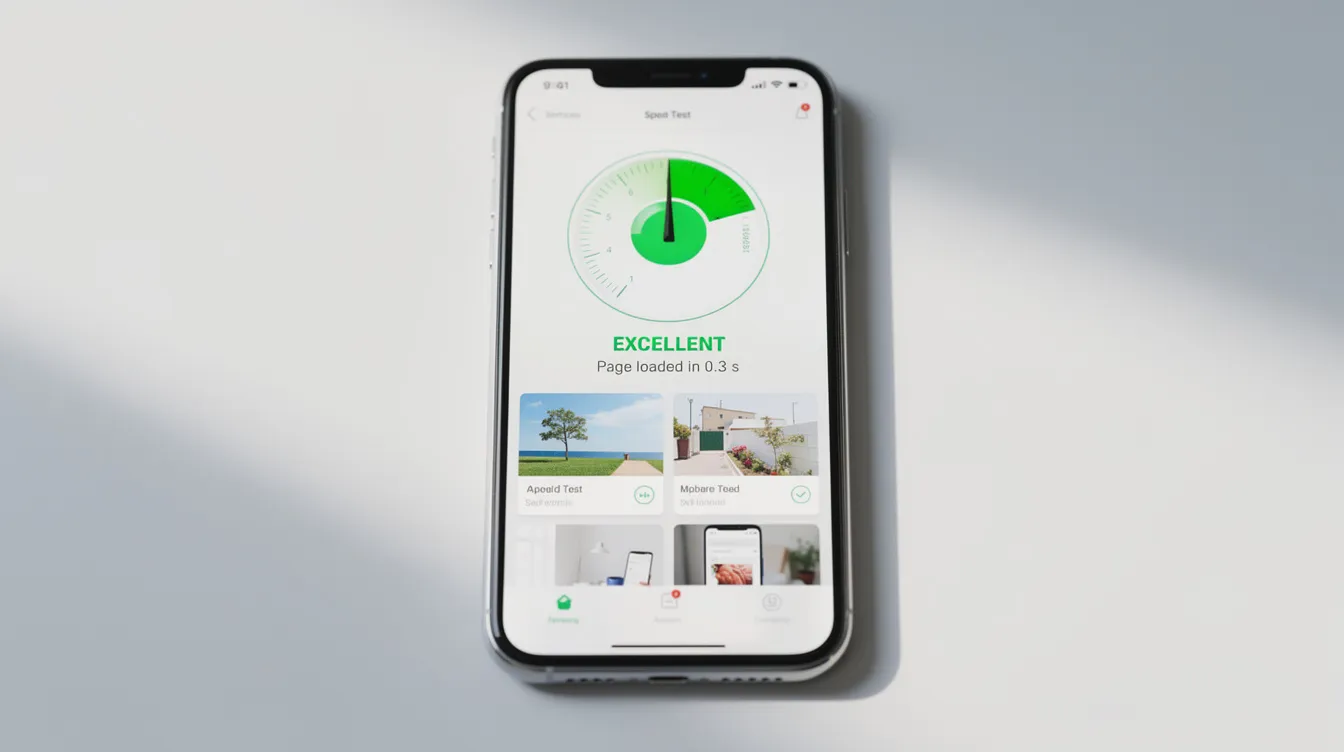
Benchmarks to aim for: The average LCP on mobile sits around 3.8 seconds – well above the 2.5-second “good” threshold. Desktop averages around 2.1 seconds. Closing that mobile gap is where the competitive advantage lies.
In a documented case study, reducing LCP from roughly 4 seconds to under 2.5 seconds led to a 15% increase in conversion rate and 8% more pageviews per session. That is real revenue impact from speed alone.
Technique 8: Use Structured Data (Schema) for Richer Search Results
Structured data is extra code – typically JSON-LD – embedded in your HTML that helps search engines understand the meaning behind your content. When implemented correctly, it can trigger rich results on the search engine results page: star ratings, FAQ dropdowns, course details, and more. These enhanced listings stand out visually and earn higher click-through rates.
Priority schema types for a brand like Adfloats:
- Course schema: Display course name, description, provider, and mode (online/offline) directly in search results. Essential for training pages.
- LocalBusiness schema: Surface business hours, address, phone number, and service area in local results.
- FAQPage schema: Show expandable Q&A pairs in search results – especially valuable for guide and service pages.
- Article schema: Help search engines categorize blog content and potentially surface it in AI summaries.
- Review schema: Display aggregate ratings from student or client reviews.
Implementation basics:
You don’t need to be a developer. Schema lives within your HTML as a JSON-LD script block – most CMS platforms (WordPress, Webflow) have plugins or settings that generate it. The critical step is validation.
Testing tools to use:
- Google Rich Results Test – paste a URL and see exactly which rich results your page is eligible for.
- Search Console Rich Results report – monitors schema performance across your entire site over time.
Where to prioritize schema first:
Start with your flagship course pages, main service pages, and top-performing blog guides. These are the relevant pages most likely to benefit from richer search engine results and AI Overview citations. Structured data is increasingly what helps search engines understand the context AI needs to cite your content.
Technique 9: Refresh, Consolidate, and Repurpose Existing Content
Here is something most people overlook: updating an old article that already has impressions and backlinks is often a faster path to traffic growth than writing a brand-new post from scratch. Google rewards freshness, and a refreshed piece inherits all the authority it has already built.
Running a content audit:
- Export your page-level data from google analytics and Search Console.
- Identify posts with decent impressions but declining click-through rates – these are prime candidates for a refresh.
- Flag pages covering the same topic that compete against each other (content cannibalization).
Specific refresh actions:
- Update statistics, screenshots, and dates to 2026. Nothing damages credibility faster than outdated numbers.
- Rewrite weak headings to be more descriptive and keyword-aligned.
- Add new FAQ sections addressing questions from “People Also Ask.”
- Improve internal and external links – point to newer, more relevant pages and remove dead links.
- Embed fresh visuals: updated screenshots, infographics, short video clips.
Consolidation strategy:
If you have three mediocre articles on overlapping topics, merge them into one comprehensive guide. Redirect the old URLs to the new page. This eliminates cannibalization, concentrates link equity, and gives search engines one strong signal instead of three weak ones.
Repurposing for maximum reach:
A high-performing blog post can become a webinar, a YouTube tutorial, a LinkedIn carousel, and a downloadable checklist – each linking back to the original. This amplifies your website’s content across social media platforms and other channels.
At Adfloats, we teach this exact content refresh process in our SEO training modules and run it quarterly on client blogs. Optimizing content you already have is one of the highest-ROI seo efforts any team can make.
Technique 10: Integrate AI and Analytics into Your SEO Workflow
AI has become a core part of modern seo strategy, but it works best as an accelerator – not a replacement – for human expertise. The smartest teams use AI to move faster on research and analysis while keeping editorial judgment and brand voice firmly in human hands.
Where AI supports SEO:
- AI is used to optimize keyword research and content generation. Keyword research tools powered by AI can cluster hundreds of keyword phrases into intent-based groups in minutes, something that used to take hours.
- Outline generation and content gap analysis: AI can scan competitors and surface topics your site hasn’t covered.
- Generative engine optimization extends traditional SEO practices, requiring you to think about how AI answer engines – not just traditional search – select and cite sources.
Cautions about AI-generated content:
Publishing AI-written articles without human review is risky. Thin, duplicate, or generic content can underperform in both search engines and AI answer engines. Always add unique insights, proprietary data, and expert perspective. Google rewards original value, not volume.
Essential SEO metrics to track monthly:
- Organic traffic and organic search traffic trends
- Keyword rankings distribution (how many keywords rank in positions 1–3, 4–10, 11–20)
- Click-through rate from search engine results
- Conversions and leads generated from organic visitors
- SEO performance metrics include visibility, organic traffic, and engagement – track all three.
Your analytics stack:
Use google search console for search performance data, Google Analytics 4 for on-site behavior, and an seo software dashboard (Ahrefs, Semrush, or Surfer) for competitive intelligence. SEO requires continuous monitoring and adjustments for effectiveness – set a monthly review cadence and stick to it.
The AI Overviews factor:
Google’s AI Overviews now reach over 2 billion monthly users and appear in roughly 50–60% of U.S. search queries. Research shows AI systems can increase organic click-through rates by 0.48% for pages cited in those summaries. Being the source AI references is the new “position zero.”
At Adfloats, we use AI-powered seo tools in both our agency work and training programs – from keyword clustering with best seo tools to testing page improvements through A/B experiments. The key is pairing automation with human judgment. That combination is what separates sustainable results from short-lived hacks. 91% of marketers report SEO positively impacts website performance, and the ones using AI smartly are seeing the fastest gains.
Step-by-Step 90-Day SEO Action Plan
Theory without execution is just trivia. Here is a realistic 90-day plan you can follow – whether you are a student building a portfolio, an entrepreneur growing a business, or a marketing team improving a website’s search engine ranking.
Month 1: Audit and Foundation
- Run a full technical audit using google search console, PageSpeed Insights, and a crawl tool like Screaming Frog (free for up to 500 URLs).
- Fix critical indexing issues: noindex errors, broken links, missing sitemaps, HTTPS problems.
- Set up Google Analytics 4 and Search Console if not already active.
- Define clear SEO objectives tied to business outcomes – leads, enrollments, demo requests – not just keyword rankings.
- Document your baseline: current organic traffic, top-ranking keywords, Core Web Vitals scores.
Month 2: Optimize and Build
- Optimize your core pages: homepage, main service pages, flagship course pages. Apply on page seo best practices – title tags, meta descriptions, heading structure, internal links.
- Improve site structure by linking related pages together and fixing orphan content.
- Launch or update 1–2 content hubs around your most important topics.
- Begin google keyword planner or keyword research tools sessions to map out the next quarter’s content calendar.
Month 3: Expand and Earn
- Start systematic off page seo outreach: guest posts, podcast appearances, co-marketing partnerships.
- Push local seo optimizations: claim and optimize your Google Business Profile, build local citations, gather reviews.
- Add structured data (schema) to your highest-priority pages.
- Begin a content refresh cycle on older articles with declining performance.
Setting realistic expectations: SEO results typically take 3 to 6 months to manifest. You may see early movement in keyword rankings by the end of Month 3, but meaningful search engine traffic growth usually kicks in around months 4–6.
If you are short on time or want expert guidance through this process, you can partner with Adfloats for hands-on SEO management or join our SEO training program to follow this plan with instructor support and real project work.
SEO vs SEM: How Organic and Paid Work Together
SEO and SEM are not competitors – they are complementary channels in a complete search engine marketing strategy. SEO focuses on organic search results, while SEM includes both SEO and paid search strategies like Google Ads. PPC requires payment for each click on ads, whereas organic rankings deliver traffic without per-click costs.
Key differences at a glance:
| Factor | SEO (Organic) | PPC (Paid Search) |
|---|---|---|
| Cost model | Time and effort investment | Pay per click |
| Speed | SEO results take weeks to months to achieve | Traffic starts within hours of launch |
| Long-term value | Compounds over time | Stops when budget stops |
| Trust signals | Higher perceived trust | Labeled as “Sponsored” |
Organic search accounts for 53% of all site traffic, but paid advertising fills the gap during the months it takes SEO to build momentum.
When to combine both:
- Testing keywords: Run a small Google Ads campaign on a keyword before investing months in content creation. If it converts, it is worth the SEO effort.
- New course launches: Use paid search for immediate visibility while building a long-term SEO-focused content hub and link building campaign around the topic.
- Competitive terms: For highly competitive keyword phrases where organic ranking will take time, paid ads keep you visible while your seo efforts mature.
Adfloats offers both SEO and Google Ads management, plus integrated digital marketing training that covers the full search engine marketing picture – because understanding how organic and paid search work together is what separates good marketers from great ones.
Common SEO Mistakes to Avoid in 2026
Even experienced marketers make mistakes that silently kill their rankings. Effective SEO requires a multi-layered approach with content and technical focus – skip a layer, and the whole structure weakens. Here are the most common pitfalls and how to fix them:
- Ignoring mobile optimization. Your site looks great on desktop but loads slowly on phones. Fix: Test with PageSpeed Insights on mobile mode weekly. Optimize images, reduce JavaScript, and prioritize mobile devices in design decisions.
- Duplicate content across city pages. You create 15 city landing pages by swapping “Mumbai” for “Delhi” with no other unique content. Fix: Add unique testimonials, local instructor bios, campus photos, and city-specific FAQs to each page.
- Buying spammy backlinks. Cheap link packages from Fiverr or private blog networks may seem tempting. Fix: Invest in genuine outreach to relevant websites. One link from an authoritative source is worth more than hundreds from irrelevant directories.
- Publishing AI-written articles without review. AI drafts can be a starting point, but publishing them raw results in generic, thin content that adds no unique value. Fix: Always add original analysis, expert quotes, proprietary data, or unique examples before hitting publish.
- Misaligned search intent. Trying to rank a sales page for a beginner informational search query (e.g., ranking a pricing page for “what is SEO”). Fix: Create separate pages for each intent type. Map every target keyword to the right page format.
- Blocking resources in robots.txt. Accidentally blocking CSS, JS, or image files prevents Google from rendering your pages properly. Fix: Use Search Console’s URL Inspection tool to see how Google renders your page. Unblock essential resources.
- Leaving staging sites indexable. A common technical misstep where a development or staging subdomain gets indexed by other search engines, creating duplicate content issues. Fix: Always noindex staging environments and password-protect them.
- Heavy pop-ups that hurt Core Web Vitals. Intrusive interstitials on mobile increase CLS and frustrate visitors. Fix: Use non-intrusive banners or slide-ins that don’t cover primary content.
How Adfloats Helps You Learn and Implement SEO
Adfloats operates at the intersection of doing and teaching. As both an SEO agency and a digital marketing training provider, we apply real campaign data in our courses – so students learn from live results, not textbook theory.
Agency services:
- Comprehensive SEO audits covering technical seo, on page seo, and off page seo
- Ongoing SEO management with monthly reporting and keyword rankings tracking
- Local seo for SMEs and training institutes across Indian cities
- AI-assisted content strategies and answer engine optimization for emerging search surfaces
Training programs:
- Beginner-to-advanced SEO courses with hands-on projects using real websites
- Full-stack digital marketing programs covering SEO, Google Ads, social media, analytics, and AI tools
- AI-in-marketing workshops for professionals looking to sharpen their seo strategy with modern tools
- 100% job placement assistance for eligible learners – we don’t just teach, we help you land the role
Real outcomes: Students who complete our SEO modules have gone on to secure roles at agencies and in-house teams within 60 days. Small business clients have seen 2–3x growth in organic search traffic within six months of implementing the techniques covered in this article.
SEO in 2026 rewards those who combine technical precision, genuine expertise, and consistent effort. Whether you are a student building your first portfolio, a job seeker adding valuable content creation to your skill set, or a business owner chasing qualified leads – these 10 techniques give you a clear, proven path forward.
Ready to take action? Book a free SEO consultation with the Adfloats team, or enroll in our next SEO training batch to learn and implement these strategies with expert support. Your website’s visibility is waiting.