


Email Marketing Best Practices for Higher Open Rates (2026 Guide by Adfloats)
Meta & SEO Setup
Before diving into strategy, here are the SEO elements configured for this article:
- Meta Title: Email Marketing Best Practices for Higher Open Rates in 2026 | Adfloats
- Meta Description: Learn proven email marketing best practices for higher open rates in 2026. Adfloats covers subject lines, send-time optimization, segmentation, AI tools, and a step‑by‑step email marketing process to boost your digital marketing ROI.
- Focus Keywords: Primary – “email marketing best practices”, “higher open rates”; Secondary – “email marketing process”, “email marketing tools”, “email list”, “digital marketing”, “marketing emails”
- Permalink Structure: /blog/email-marketing-best-practices-higher-open-rates-2026/
Introduction: Why Open Rates Still Matter in Digital Marketing
Email marketing is a digital marketing strategy using email to promote products, nurture leads, and retain customers. In 2026, users are expected to send nearly 392.5 billion emails daily, making the inbox one of the most crowded and competitive spaces in marketing. Yet email remains a cost effective way to reach a large audience because it provides a direct communication channel with subscribers that businesses fully own, unlike social media followers that can vanish with an algorithm change.
The numbers back this up. Email marketing can yield an average ROI of $42 for every dollar spent, outperforming most other channels in measurable results. It helps build customer relationships through regular communication and can engage recipients at their convenience, unlike phone marketing or in-person outreach. Email marketing is also cost-effective compared to traditional advertising channels, which makes it especially attractive to small and medium businesses looking to drive sales without massive budgets.
So why do open rates still matter? Because open rate is the first gate. If your message reaches the inbox but nobody opens it, your carefully crafted content, offers, and calls to action never get seen. Open rates connect directly to broader digital marketing goals: brand awareness, lead generation, customer retention, and revenue. At Adfloats, we use AI-powered strategies to help businesses and learners master email marketing alongside SEO, Google Ads, and social media. This guide gives you practical, immediately usable best practices – including an end-to-end email marketing process any marketer or SME can follow starting today.

Understanding Open Rates and Email Marketing Metrics
Before optimizing anything, you need to understand what the numbers actually mean and where they can mislead you. Open rate has become less “absolute” since Apple’s Mail Privacy Protection (MPP) launched in 2021. By 2026, roughly 50–60% of recorded opens are automatically generated by proxy or bot pixel loads rather than real human engagement.
Here is how open tracking works: your email service provider embeds an invisible tracking pixel (a tiny image) in each email. When a recipient opens the email and loads images, that pixel fires a request back to the server, registering an “open.” The problem is that Apple MPP, Gmail proxy caching, and similar tools preload those images without any human action, inflating reported open rates by 10–20 percentage points.
This is why you should treat open rate as a directional signal – useful for spotting trends and deliverability problems – but pair it with more reliable key metrics:
| Metric | What It Measures | 2026 Healthy Target |
|---|---|---|
| Open Rate (raw, ESP-reported) | Emails opened ÷ delivered | 30–45% (inflated by MPP) |
| True Open Rate (MPP-filtered) | Human opens only | 25–35% opt-in; 15–25% cold |
| Click-Through Rate (CTR) | Recipients who click links ÷ delivered | 2.0–2.5% broadcast; 4–6% flows |
| Click-to-Open Rate (CTOR) | Clicks ÷ opens | 8–12% average |
| Conversion Rate | Recipients who complete desired actions | Varies by goal |
| Bounce Rate | Emails not delivered successfully | < 2% hard bounces |
| Spam Complaint Rate | Complaints ÷ delivered | < 0.1% |
| Unsubscribe Rate | Unsubs ÷ delivered per send | < 0.3% |
Click-through rates measure the percentage of recipients who click links in your email, and conversion rates show how many recipients complete desired actions like purchases or sign ups. Bounce rate indicates the percentage of emails not delivered successfully, which directly impacts your sender reputation.
Email marketing provides measurable results such as open rates and click-through rates, and email marketing tools provide analytics to track open and click rates in real time. Open rates average 18.94% in the advertising industry – one of the lower-performing sectors – while well-managed opt-in lists in other industries regularly hit 25–35% true opens.
Consider two campaigns: Campaign A and Campaign B both show a 38% open rate. But Campaign A generates a 1.2% CTR and $400 in revenue, while Campaign B hits 4.1% CTR and $2,800. The open rate told you nothing useful. CTR and revenue told you everything.
The Email Marketing Process: From Strategy to Send
Here is a simple, repeatable email marketing process that Adfloats uses with clients and teaches in our training programs. Email marketing campaigns should have clear objectives and targeted audience segmentation before a single email is drafted.
The stages:
- Define objectives – what business outcome does this campaign serve?
- Understand your target audience – who are you reaching and what do they care about?
- Choose your email marketing platform – select the right tool for your scale and needs.
- Build and segment your email list – permission-based, clean, and organized.
- Plan your content calendar – map emails to dates, events, and lifecycle triggers.
- Design and test – create the email, run QA, preview on mobile devices.
- Launch and monitor – send to the right segment at the right time.
- Optimize – analyze results, run tests, feed learnings into future campaigns.
Email marketing relies on third-party platforms for execution, so choosing and configuring your tools correctly matters from day one. A full campaign cycle from planning to first performance report typically takes 4–6 weeks. This process integrates with other digital marketing channels – your email campaigns can drive traffic to blog post content optimized for SEO, retarget visitors from Google Ads, and feed data into Google Analytics for unified reporting.

Step 1: Set Clear, Measurable Campaign Goals
Every email marketing campaign needs a single primary goal. Not three goals. One. Examples:
- “Generate 150 webinar registrations by August 20, 2026.”
- “Reduce cart abandonment rate by 15% using a 3-email recovery sequence in Q3.”
- “Re-engage 10,000 dormant email subscribers over 90 days.”
Write SMART goals tied to measurable results: specific open rate targets, click through rates, sign-ups, or revenue per email. These goals should align with wider digital marketing KPIs such as cost per lead, customer lifetime value, or pipeline influenced.
An SME selling online courses, for example, might set a goal to increase course enrollment from email by 20% in a single quarter – then build a dedicated nurturing sequence with that outcome as the only measure of success.
Step 2: Define and Segment Your Audience
Generic blasts to your entire list are the fastest way to kill engagement. Instead, create 2–3 concrete buyer personas. For example: “SaaS founder in Bangalore, 5–20 employees, looking for cost effective lead generation” or “Career changer, age 25–35, exploring digital marketing certifications.”
Email marketing enables targeted personalization through audience segmentation. Segment your audience based on demographics or behaviors – the key segmentation types are:
- Demographic/firmographic: age, location, company size, job title
- Behavioral: recent opens, clicks, purchase history, website activity
- Lifecycle stage: new subscribers vs. active customers vs. existing customers who haven’t purchased in 90+ days
Segments that directly impact open rates include new leads from the last 30 days (typically highest engagement), dormant subscribers inactive for 90+ days (lowest), and a high-engagement segment with 3+ opens in the last 10 campaigns. Implement segmentation directly inside your chosen email marketing platform, not in spreadsheets.
Step 3: Select the Right Email Marketing Platform and Tools
An email marketing platform (also called an email service provider) is the software you use to build, send, track, and automate your marketing emails. Over 4 billion emails are sent daily using marketing platforms, and choosing the right one affects everything from deliverability to reporting.
Must-have email marketing tools and features include:
- List management and segmentation
- Drag-and-drop email templates
- Marketing automation workflows and triggers
- A/B testing capabilities
- Analytics dashboards
- Integrations with CRM, Google Analytics, and other tools
Deliverability features are non-negotiable: domain authentication (SPF, DKIM, DMARC), dedicated IP options, and spam score previews before sending. Email marketing tools can automate sending emails based on triggers like abandoned carts, form submissions, or tag changes.
At Adfloats, we layer AI-powered tools and custom workflows on top of standard ESPs to improve copy, targeting, and reporting for clients – combining the reliability of proven platforms with the speed and precision of generative AI.
Step 4: Build and Grow a High-Quality Email List
Your email list is the foundation. Businesses own their subscriber list in email marketing, unlike social media where reach depends on algorithms you do not control. But list quality matters far more than list size.
Permission-based list building only. No purchased lists, rented databases, or scraped email addresses. These tactics destroy deliverability and violate global regulations.
Concrete list-building tactics:
- Website signup forms – homepage, blog sidebar, in-content CTAs
- Lead magnets – a free 2026 digital marketing playbook PDF, SEO checklist, or email template pack
- Webinar and event registrations – capture email during sign up for upcoming events
- Checkout opt-in – post-purchase checkbox for ecommerce
- Exit-intent pop-ups – catch visitors before they leave
Use double opt-in to ensure verified email subscriptions. This adds a confirmation step that filters out typos, bots, and uninterested contacts. Always tell new subscribers exactly what type of messages they will receive and how often. Email marketing uses email to connect with potential customers, but only when those potential customers have actually asked to hear from you.
Crafting Subject Lines That Consistently Earn Opens
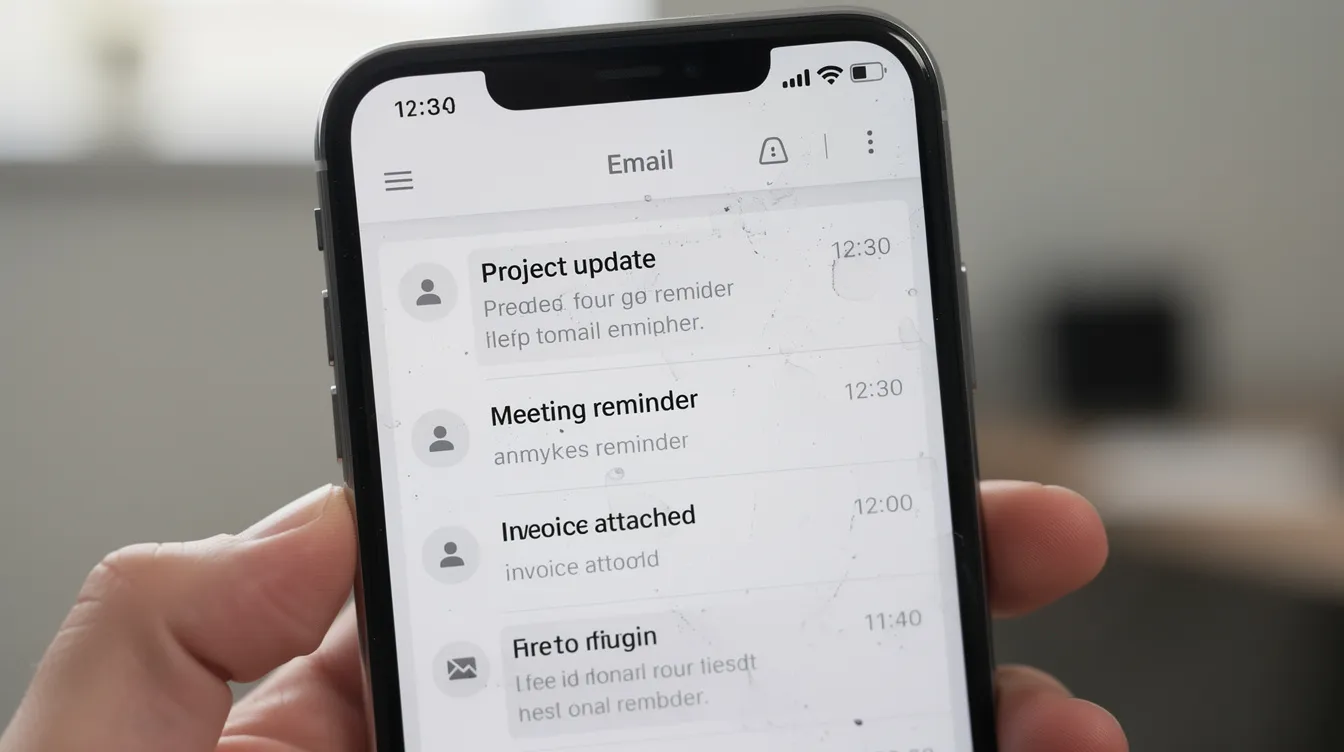
Three elements determine whether someone opens your email: subject line, sender name, and preheader text. Of these, the subject line carries the most weight.
A strong subject line is clear, relevant, and creates a sense of value or curiosity – without resorting to clickbait or spammy tactics. Write short, effective subject lines to increase open rates. Keep them around 40–60 characters to avoid truncation on mobile devices, where most users read email today.
Preheader text acts as a secondary headline. It should support or expand on the subject line, not repeat it word for word. Think of it as the “subtitle” that appears in the inbox preview alongside your subject line.
Proven Subject Line Formulas for Higher Open Rates
Here are six patterns you can adapt for any email marketing campaign:
- Benefit-driven: “Cut your email bounce rate in half this month”
- Curiosity: “The one metric we stopped tracking (and why)”
- FOMO: “Only 12 seats left in our September 2026 cohort”
- Numbers and specifics: “5 email flows that generated $14K in 30 days”
- How-to: “How we lifted open rates from 18% to 29% in 30 days”
- Question: “Is your email list costing you money?”
Tailor tone by segment: more direct for B2B founders, more playful for consumer brands, but always aligned with your brand voice. Avoid overusing urgency phrases like “last chance” or “only today” – they erode trust and can trigger spam filters. All-caps subject lines are another common mistake that hurts deliverability.
Using Generative AI to Ideate and Refine Subject Lines
Generative AI can produce multiple subject line variations in seconds from a short campaign brief. Brands using AI subject-line generators report lifts of 25–30% in open rates versus manually crafted ones.
The workflow we recommend at Adfloats:
- Define campaign goal and specific audience segment
- Generate 10–20 subject line options using AI
- Shortlist 3–4 based on brand voice, accuracy, and compliance
- Run A/B tests on the top 2–3 candidates
Treat AI outputs as drafts – refine for accuracy, brand tone, and relevance rather than copy-pasting unedited. And a critical note on privacy: do not paste sensitive personally identifiable information or client data into public AI tools. Use secure, enterprise-grade solutions whenever possible.
Deliverability and List Hygiene: The Hidden Drivers of Open Rate
The best subject line in the world is useless if your marketing emails never reach the inbox. Spam filters can prevent emails from reaching inboxes, and reaching inboxes is increasingly difficult due to competition from the hundreds of billions of messages sent daily.
Deliverability refers to how many of your emails land in the primary inbox versus spam or the promotions tab. Poor deliverability silently destroys campaign performance without giving you any visible error.
Key technical setup points:
- Authenticated sending domain: configure SPF, DKIM, and DMARC records for your domain (e.g., @yourbrand.com)
- Consistent sender identity: send from the same domain and sender name every time
- IP/domain warm-up: gradually scale volume over several weeks rather than blasting your full list on day one
- Spam complaint rate: keep below 0.1%, ideally under 0.08%
Only about 30–50% of high-traffic sending domains have DMARC enforcement policies in place as of early 2026. If yours is among them, you already have an edge.
Include a clear unsubscribe link in every email – not buried in size-8 font at the bottom, but accessible and honest. This is both a legal requirement and a trust signal.
List Cleaning, Segmentation, and Sunset Policies
List hygiene means removing invalid email addresses, hard bounces, and chronically inactive email subscribers to improve engagement rates. Regularly clean your subscriber lists to remove inactive users – we recommend quarterly at minimum.
Create an inactive segment: subscribers with no opens or clicks for 90–180 days. Before suppressing them permanently, run a sunset flow:
- Email 1 (Day 1): “We miss you – here is what you have been missing” with a compelling piece of valuable content
- Email 2 (Day 5): “Do you still want to hear from us?” with a one-click reconfirm link
- Email 3 (Day 12): “Last email unless you opt in again” – final chance
Subscribers who do not re-engage get suppressed. This feels counterintuitive – why shrink your list? – but smaller, more engaged subscriber lists consistently outperform huge, stale ones on both deliverability and revenue per send. An ecommerce brand that implemented this approach saw their CTR improve by roughly 25% and revenue per email increase, even with a smaller list.
Send Frequency and Cadence: Avoiding Email Fatigue
There is no universal “perfect frequency.” But there is a universal truth: email fatigue can lead to decreased engagement and unsubscribes. Overly frequent sends depress open rates and annoy subscribers. Too infrequent, and they forget who you are.
Starting points:
- Newsletters: weekly or bi-weekly
- Campaign blasts: as needed, but rarely more than 2–3 per week
- Automated flows: triggered by behavior, not calendar
Use segment-based frequency capping: high-engagement subscribers can receive more touchpoints, while low-engagement segments should hear from you less often. AI and analytics can help predict optimal frequency by segment, analyzing past engagement patterns to recommend cadence adjustments before fatigue sets in.
Designing Marketing Emails for Attention and Clicks
Design impacts whether readers understand value quickly and whether they take the next step. Creating effective emails requires significant time and resources, but the payoff compounds: well-designed emails train subscribers to trust your brand, which lifts open rates over time.
Mobile-first design is vital as over half of emails are opened on smartphones. Design principles:
- Simple layout: logo, headline, short copy, single main CTA, then secondary content
- Scannable body copy: short paragraphs, bullet points, buttons rather than only text links
- Accessible design: sufficient color contrast, readable font sizes (at least 14–16px), descriptive alt text for key images
Test your emails across major email providers and devices before every send. What looks perfect in Gmail on desktop can break entirely in Outlook on a phone.
From Inbox Preview to Click: Sender Name, Preview Text, and Above-the-Fold Content
A recognizable sender name builds trust over time. Use something consistent and human-sounding – “Adfloats Team” or “Priya from Adfloats” works better than “noreply@adfloats.com.”
Place your main value proposition and CTA above the fold so recipients see it without scrolling on a typical phone screen. Every email should have one primary CTA whenever possible – “Enroll in the September 2026 cohort” or “Book a free strategy call” – not five competing links pulling attention in different directions.
Content Types That Keep Subscribers Opening
Consistently delivering relevant communications trains subscribers to expect value, which increases future open rates. Here are the content types that perform:
- Welcome emails introduce new subscribers to the business and set expectations
- Newsletter emails provide updates and useful content to subscribers
- Promotional emails advertise special offers and new products
- Cart abandonment emails remind customers to complete their purchases and drive repeat purchases
- Lead nurturing emails aim to convert interested prospects into customers
- Survey emails request customer feedback to improve products
- Automated drip campaigns deliver relevant messaging based on user behavior
Balance promotional content with educational and relational content. A 70/20/10 mix works well: 70% valuable content (how-to tutorials, case studies with real numbers, curated industry news), 20% soft promotion, and 10% direct offers. At Adfloats, our newsletter follows this model – weekly digital marketing tips, a monthly “AI in Marketing” update, and quarterly success stories from training graduates.
Personalization, Automation, and AI: Scaling Open Rates Smartly
Personalization in 2026 goes far beyond “Hi, [First Name].” Email marketing allows businesses to nurture relationships with customers through deeply personal, behavior-driven relevant communications at scale.
What can be personalized:
- Subject lines (by segment, behavior, or purchase history)
- Sender name (department or individual rep)
- Content blocks (different product recommendations per segment)
- Send time (based on when each subscriber typically opens)
Marketing automation sequences maintain consistent, relevant direct communication without manual effort for every send. Email marketing facilitates A/B testing to improve engagement across each of these variables. At Adfloats, we combine human marketing strategy with generative AI for segmentation insights, copy variants, and predictive scoring – delivering the right message to each specific audience segment at scale.

Key Automated Email Flows That Boost Long-Term Open Rates
Core automation sequences every email marketing strategy should include:
| Flow | Primary Goal | Typical Length | Impact on Opens |
|---|---|---|---|
| Welcome series | Introduce brand, set expectations | 3 emails / 7 days | Sets engagement baseline |
| Onboarding sequence | Activate new users or customers | 4–6 emails / 14 days | Builds habit of opening |
| Lead nurturing drip | Move prospects toward conversion | 5–8 emails / 30 days | Maintains top-of-mind |
| Cart/form abandonment | Recover lost conversions | 2–3 emails / 3 days | Drives immediate revenue |
| Re-engagement | Win back dormant subscribers | 2–3 emails / 14 days | Cleans list, recovers some |
| Post-purchase upsell | Increase customer loyalty and LTV | 2–3 emails / 7–21 days | Strengthens brand loyalty |
Flow emails often generate 3–5× higher revenue per email send than one-off broadcast campaigns. Such emails outperform because they are triggered by specific actions – a website visit, a purchase, a tag update in your CRM – making them inherently more relevant.
Example: A 3-email welcome series over 7 days that introduces Adfloats, shares a free SEO checklist, and invites the subscriber to a free strategy session. This sequence alone can lift long-term open rates for all subsequent email campaigns by establishing immediate value.
Using AI for Timing, Segmentation, and Content Optimization
AI can analyze historic campaign data to recommend optimal send times per subscriber or segment. Instead of guessing whether Tuesday at 10 AM or Thursday at 2 PM performs better, AI-driven send-time optimization tests and adapts at the individual level.
AI-driven engagement scoring ranks email subscribers by likelihood to open or click, allowing you to adjust targeting and frequency accordingly. High-probability openers might receive more frequent touchpoints, while low-probability segments get fewer, higher-impact sends.
You can also use AI to auto-generate content blocks tailored to industries or interests – separate copy for ecommerce users versus B2B services, for instance – while keeping final human review mandatory. Adfloats training programs teach marketers how to practically use generative AI in email marketing without losing brand voice or control.
Testing, Analytics, and Continuous Optimization
Consistent testing and measurement turn one-off wins into a scalable email marketing system. Adopt an “always-be-testing” approach, but change one main variable at a time to keep results interpretable.
Track campaign performance at multiple levels: individual campaign, segment, and whole program over monthly and quarterly timeframes. Use A/B testing to optimize email campaign performance across every element that influences opens and clicks. Tie email campaigns to web analytics using UTM parameters in links to track onsite behavior and conversions through tools like Google Analytics, not just opens and clicks.
At Adfloats, we build dashboards in tools like Looker Studio for clients to visualize email performance alongside SEO, paid ads, and social media – giving a unified view of how email contributes to website traffic and revenue.
Essential A/B Tests to Improve Open Rates
Specific elements to test for open rate gains:
- Subject line wording: different angles on the same offer
- Emoji usage: with vs. without, and which emoji
- Sender name format: brand name vs. personal name vs. combination
- Preheader text variations: benefit-focused vs. curiosity-driven
- Send day and time: weekday morning vs. afternoon vs. weekend
Run each test with at least a few hundred recipients per variant and allow enough time (typically 24–48 hours) for statistically meaningful results. Document every test hypothesis, result, and learning in a shared testing log so improvements are cumulative. As your list size and tooling mature, move from simple A/B tests to multivariate or multi-armed bandit tests.
Reading the Data: From Open Rates to Revenue
Interpret open rate trends over time and across segments. A sudden 10-point drop across all segments likely signals a deliverability issue, not a content problem. A gradual decline in one segment might mean content fatigue or list decay.
Connect email metrics to business metrics: leads generated, qualified opportunities, course enrollments, or revenue per email marketing campaign. A campaign with a 22% open rate and a 4.5% CTR that drives $8,000 in course enrollments outperforms one with a 40% open rate, 1% CTR, and $500 in revenue.
Create a monthly or quarterly email performance review that feeds insights back into your email marketing process and long-term marketing strategy. This review should cover deliverability health, engagement trends, revenue attribution, and a prioritized list of tests for the next cycle.
Legal Compliance, Ethics, and Trust in Email Marketing
Sustainable open rates depend on trust, and trust is reinforced by ethical behavior and legal compliance. Here are key considerations for 2026:
- GDPR (EU): requires explicit consent, right to erasure, and transparent data handling
- CAN-SPAM (US): requires accurate sender info, honest subject lines, working unsubscribe mechanisms
- Local regulations: marketers must check laws for their specific markets, as global regulations continue to expand
Stress clear consent in every opt in process, transparent privacy policies, and honest unsubscribe mechanisms that work within one or two clicks. Secure storage of email lists, limited access to subscriber data, and never selling or sharing personally identifiable information with unrelated third parties are non-negotiable.
At Adfloats, we train marketers to apply best practices that respect user privacy while achieving measurable results – because the fastest way to destroy an email account reputation is to cut corners on compliance.
Building Long-Term Trust with Your Email List
Every marketing email should feel expected, relevant, and respectful of the subscriber’s time and inbox. When subscribers trust you, they open. When they do not, they ignore, report spam, or unsubscribe.
Practical trust-building tactics:
- Preference centers: let subscribers choose email frequency and topics rather than offering only a full unsubscribe option
- Value-first emails: send occasional purely educational content with no sales pitch – trend reports, checklists, or free tools – to build customer engagement and brand loyalty
- Consistent cadence: show up reliably, not randomly
Consistent trustworthiness leads to higher long-term open rates and word-of-mouth referrals for both your email list and your brand. When people forward your newsletter to colleagues, your list grows organically with high-quality new subscribers who already trust you.
How Adfloats Can Help: Services, Training, and Next Steps
Adfloats supports both businesses and individuals in mastering email marketing within a full digital marketing strategy.
Agency services:
- Done-for-you email marketing strategy, campaign creation, and marketing automation setup
- Deliverability audits and list hygiene programs
- Integration with SEO, Google Ads, and social media marketing campaigns
- Custom analytics dashboards connecting email to revenue
Training and education:
- Structured digital marketing courses covering email marketing tools, AI in email, analytics, and more
- Modules on the complete email marketing process from list building to advanced automation
- 100% job placement assistance for eligible tracks
Email marketing offers a high return on investment, averaging $42 per dollar spent – and the marketers who understand how to combine fundamentals with AI-powered optimization will capture a disproportionate share of that return.
Ready to improve your email marketing?
- Book a free strategy call to audit your current email program and identify quick wins
- Download our 2026 email marketing checklist for a step-by-step reference you can use immediately
- Enroll in the September 2026 Adfloats digital marketing cohort to learn email marketing, SEO, paid ads, and AI tools hands-on
Start with one improvement this week – a cleaner list, a better subject line, or a single automated flow – and build from there. The inbox is crowded, but with the right approach, your messages will be the ones people actually want to open.
Subscribe to the Adfloats newsletter for weekly digital marketing tips, email marketing case studies, and AI strategy updates delivered straight to your inbox.