

Content Marketing Strategy: How to Generate Leads and Sales (Adfloats 2026 Guide)
Introduction: Why Content Marketing Still Wins in 2026
Between 2020 and 2026, cost-per-click on Google Ads rose by an estimated 18–30% year over year, and Meta Ads followed a similar trajectory. For small and mid-sized businesses watching their ad budgets shrink in value, content marketing offers a fundamentally different path: one where every article, video, and email you publish keeps working for months or years without continuous ad spend. That compounding effect is why 93% of companies now use content marketing as a core part of their strategies.
Content marketing is the practice of creating and distributing valuable content – articles, videos, emails, guides – to attract potential customers, earn their trust, and move them toward a purchase. It works as an inbound engine: instead of interrupting people with social media ads or buying ad space, you pull them in by answering the questions they are already asking. Content marketing can reduce customer acquisition costs significantly compared to paid-only approaches, and it helps build a stable lead pipeline over time rather than a revenue spike that disappears the moment you pause spending.
This guide will show you how to define content marketing for your business, build a content marketing strategy tied to revenue, create content that ranks in search engines and converts visitors into buyers, and measure ROI so you know what is working. At Adfloats, we use the same frameworks described here for our agency clients and for students in our AI-powered digital marketing courses. By the end, you will be able to map a simple lead-generation funnel for your business, plan 90 days of strategic content including blog posts and lead magnets, and connect each piece of content to a measurable sales outcome.

What Is Content Marketing (and How Does It Actually Work)?
Content marketing is a strategic marketing approach focused on creating and distributing valuable, relevant, and consistent content to attract and retain a clearly defined audience – and ultimately drive profitable customer action. It is not about pushing products. It is about earning attention by being genuinely useful.
In one sentence: content marketing is the discipline of using digital content – from blog posts and videos to podcasts and interactive tools – to guide ideal customers through the buying process without aggressively pushing a sale. Content is any information created to provide value and communicate a brand’s message online. Content marketing aims to attract and retain audiences by providing helpful information that solves real problems. High-quality content educates and informs your audience, building trust long before a sales conversation happens.
Here is how content marketing work flows in practice. People discover your content via search engines, social media platforms, or referrals from other sites. They consume blog posts, watch videos, or listen to podcasts. If the content is genuinely useful, they subscribe to a newsletter, download a guide, or fill out a contact form. Over time, sales teams or automated email funnels convert those leads into customers.
Consider a B2B example: a SaaS startup in 2025 published comparison blog posts like “Best Project Management Tools for Remote Teams” and educational guides explaining workflow automation. Over twelve months, those pages ranked in search results, attracted organic traffic, and fed a steady pipeline of demo requests. On the B2C side, a direct-to-consumer skincare brand built an email list by offering free content – video tutorials on skincare routines and seasonal how to guides – then converted subscribers into buyers through targeted offers.
The difference between content marketing work and generic posting is strategy, consistency, and alignment with business goals. Random social media posts without a plan rarely generate leads. Content marketing works particularly well when combined with search engine optimization, marketing analytics, and email marketing – services Adfloats offers across its agency and training programs.
Content, Content Strategy, and Content Marketing Strategy – Key Terms
Many teams confuse “content,” “content strategy,” and “content marketing strategy,” which leads to scattered efforts and weak results. Let’s define content and its related terms clearly.
Content – sometimes traced to the medieval latin contentum, meaning “that which is contained” – is simply the material you publish. Blog posts, YouTube videos, LinkedIn carousels, podcasts, ebooks, landing pages, white papers, opinion pieces, and social media content all qualify. Think of it as the content noun: the substance itself, in whatever form it takes. Whether discussing american history in an educational article or comparing software tools, the past participle of “contain” gives us the word, but in the digital world it means substantive information packaged for an audience.
Content strategy is the upstream decision layer. It determines what topics to cover, which formats of digital content to invest in, brand voice, and how content supports overall business goals, customer retention, and thought leadership. It answers “what should we say and why?”
A content marketing strategy goes further. It is the specific plan for using content to attract organic traffic, generate leads, and turn those leads into paying customers and repeat buyers. It maps every content piece to a funnel stage and a measurable outcome. An example: “Between July and December 2026, we will publish 24 SEO-optimized blog posts and four gated ebooks targeting marketing managers at 20–200 employee companies, with the goal of generating 80 marketing-qualified leads per month for our content marketing services.” Defining clear goals like this is crucial for content marketing success.
How Content Marketing Generates Leads and Sales
Content does not produce revenue by accident. Here is the step-by-step path from publishing to profit, and the benchmarks that show why savvy content marketers invest in this channel.
From Attention to Revenue
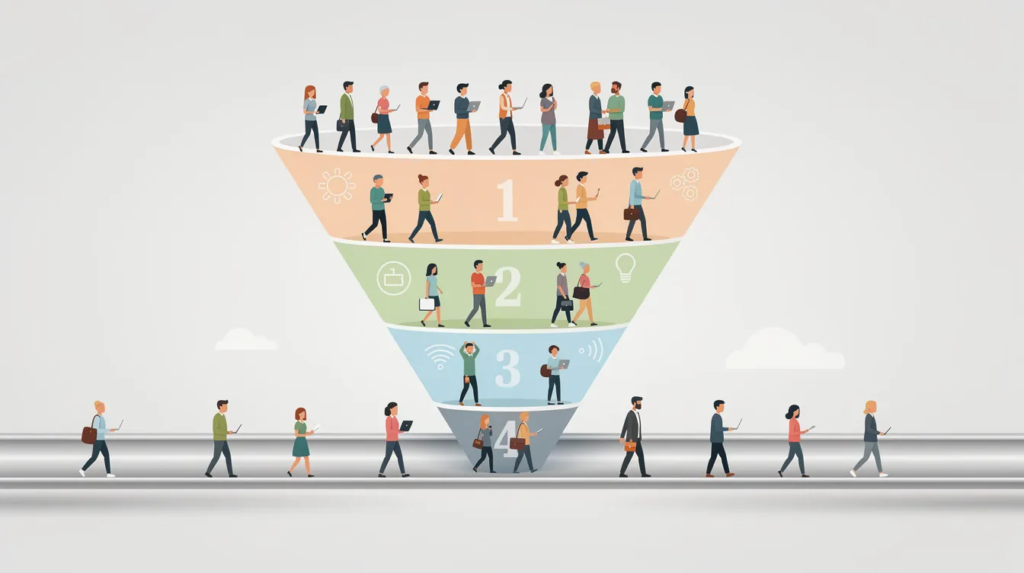
The financial chain works like this: you publish valuable content that earns attention, that attention turns into website traffic, traffic converts into leads via forms and CTAs, leads are nurtured into sales opportunities, and opportunities close into customers. After the sale, ongoing content drives customer retention and upsells.
Research shows that 62% of B2B buyers read 3–7 pieces of content before contacting sales, and 73% of B2B marketers incorporate content marketing into their strategies. Content maps directly to different stages of the buyer’s journey – awareness, consideration, decision, and retention – making it a powerful tool for pipeline building.
Common Pre-Sale Content Touchpoints
A typical buyer in 2026 interacts with three to five blog posts during the awareness stage, downloads a lead magnet (ebook, checklist, or template) during consideration, and reads a product comparison page or case studies before making a decision. Clear Calls-to-Action are essential to guide the reader on what to do next at every touchpoint.
Lowering the Cost to Acquire Customers
SEO-driven content marketing delivers some of the lowest cost-per-lead numbers available. Data from 2026 benchmarks shows organic search delivering CPLs around $34, compared to $75–$150 for LinkedIn Ads and higher for many paid search campaigns. Over time, quality content lowers paid acquisition cost by improving email list growth, organic traffic volume, and even Quality Score on paid campaigns that share landing pages with organic content.
Retention and Lifetime Value
Content marketing does not stop at the sale. Ongoing educational content – onboarding sequences, advanced how to guides, feature update emails – reduces churn and increases lifetime value. At Adfloats, we use analytics tools such as Google Analytics 4 and Search Console to attribute leads and sales back to specific pieces of content, so every article earns its keep.
Core Types of Digital Content to Create in 2026
Content marketers should choose formats based on target audience behavior and sales cycle length, not trends. Here are the formats that matter most in 2026, along with their strategic role.
Blog Posts. Blog posts are the most commonly used content type, and for good reason. They are foundational for SEO, capable of ranking for bottom-, middle-, and top-of-funnel keywords. A well-structured blog post with internal links, clear headings, and a strong CTA to a lead magnet or demo can generate leads for years. Most marketers start here because the barrier to entry is low and the compounding return is high.
Long-Form Guides, Ebooks, and White Papers. These serve as lead magnets for B2B and high-ticket offers. Ebooks provide in-depth knowledge on specific topics, and gating them behind a landing page connected to a CRM captures contact information for nurture sequences. Original research reports – benchmark studies, survey results – perform especially well for both lead generation and AI citation visibility.
Video Content. Videos are highly engaging and popular on social media. YouTube tutorials, short-form Reels, and Shorts are growing in importance for audience engagement. A product explainer or educational video can be repurposed: the script becomes a blog post, key quotes feed social media posts, and clips become email content. Integrating visuals helps retain the reader’s message in content, making video a strong complement to text.
Email Newsletters and Nurture Sequences. Owning this channel gives you control that no algorithm change can take away. Weekly educational emails build trust. Occasional promotional emails drive conversions. Segmenting by persona or user behavior improves open and click through rates significantly.
Podcasts and Webinars. Podcasts are audio content that can be streamed or downloaded, making them ideal for thought leadership and top-of-funnel awareness. Webinars are more direct for lead generation – conversion rates of 30–40% have been reported in targeted B2B settings. At Adfloats, live workshops on SEO and AI tools serve both as free content and as enrollment drivers for our courses.
Interactive Content. Calculators, quizzes, ROI estimators, and polls engage users and capture data simultaneously. Interactive content includes quizzes and polls that qualify leads while educating them – an advanced format that increases both engagement and conversion.
Infographics. Infographics simplify complex information into visual formats, making data digestible and shareable across different platforms. They work well as supporting assets within blog posts or as standalone social media content.
5-Step Content Marketing Strategy: From Idea to Revenue
Random content posting will not hit business goals. This 5-step framework is what Adfloats uses with clients and trainees to connect content marketing efforts to revenue. The five steps are: 1) Define your goals, 2) Define your audience, 3) Map your funnel and topics, 4) Plan and create content, 5) Distribute, measure, and optimize. Each subsection below expands on one step with practical instructions and examples relevant to 2026.

Step 1: Connect Content to Clear Business Goals
Every content strategy must begin with business goals – revenue targets, lead volume, sales cycle length, and target markets. Without this, you produce vanity content that looks good on a dashboard but generates zero sales.
Here are three example goals translated into content KPIs:
- B2B SaaS: “Generate 100 marketing-qualified leads per month for our SEO service by Q4 2026.” Content KPIs: organic sessions (+50% over Q2), newsletter signups, demo requests.
- Training provider (Adfloats): “Enroll 50 students in the August 2026 cohort of our Digital Marketing Course, with 80% of leads from organic content and email nurture by July 31, 2026.”
- D2C ecommerce: “Increase monthly sales by 30% in Q3 2026, grow email list by 5,000 subscribers per month via tutorials and video content, reduce CAC from $85 to $60.”
Every content piece should align with at least one of these goals and have a clear measurement method. Here is a sobering stat: 70% of organizations create more content year over year, but only 21% track ROI effectively. Do not join that majority.
Step 2: Define Your Ideal Audience and Buyer Journey
Building one to three buyer personas keeps your content relevant and your leads qualified. A practical persona includes role, company size, location, pain point, search behavior, and buying authority. For example, one Adfloats persona is a job seeker in 2026 wanting a digital marketing role with placement assistance, searching for “best digital marketing course with placement” on mobile devices during evenings and weekends.
Map a simple customer journey with four stages – awareness, consideration, decision, retention – and list the questions prospects ask at each stage. In awareness, they ask “What is content marketing?” In consideration, they search “content marketing strategy vs paid ads.” In decision, they look for pricing, case studies, and reviews. This mapping ensures you create content for the right person at the right time.
Good audience definition improves content relevance, lead quality, and customer retention later. You stop creating content for everyone and start reaching the right audience – your ideal customers who are most likely to buy.
Step 3: Perform Topic and Keyword Research (SEO-First Planning)
Content marketers should use SEO tools – Google Keyword Planner, Ahrefs, SEMrush, or free alternatives – to find search terms aligned with their audience’s questions. Search engines require readable, keyword-rich, and relevant content to rank a website, so content marketing is essential for SEO success.
The process is straightforward: brainstorm topics based on persona pain points, pull keyword data for search volume and difficulty, group keywords into themes, and prioritize based on commercial intent. High-quality content helps rank at the top of search results, but only when the keyword targeting is deliberate.
Distinguish between top-of-funnel queries (“what is content marketing”), middle-of-funnel comparisons (“content marketing strategy vs paid ads”), and bottom-of-funnel searches (“Adfloats content marketing services pricing”). Map 20–40 priority keywords into a content calendar for the next 90 days, focusing heavily on blog posts and long-form guides that can build organic traffic by late 2026.
Optimize for featured snippets and People Also Ask by structuring content with clear headings and concise answers in the opening paragraph of each section.
Step 4: Create Content That Attracts, Engages, and Converts
Creating great content requires research depth, a strong outline, consistent brand voice, supporting visuals, and on-page SEO elements – title tags, meta descriptions, H1–H3 usage, and internal links. Content marketing improves brand visibility and authority online, but only when the content itself is genuinely useful.
Strong headlines and hooks matter. Providing actionable, solution-oriented insights directly solves your audience’s problems and keeps them reading. Adfloats teaches copywriting fundamentals – headlines, CTAs, hooks – in its training programs for aspiring content marketers.
Design every blog post to generate leads. Include content upgrades (PDF checklists, templates), in-article CTAs, sidebar forms, and exit-intent popups where appropriate. A single well-optimized post with a relevant lead magnet can convert at 3–5% visitor-to-lead, compared to the 0.5–1% average for posts with no offer.
Use AI tools ethically for ideation, outlines, and first drafts. In 2026, 87% of enterprise marketing teams use AI tools, with content creation as the top use case. But AI drafts require human editing, fact-checking, and brand voice consistency. Utilizing personal experiences or case studies builds trust and authenticity – generic AI output does not.
Step 5: Distribute, Measure, and Continuously Improve
Publishing is half the work. Distribution is where consistent content reaches the right audience across channels: search engine optimization for organic discovery, social media (LinkedIn, Instagram, YouTube) for amplification, email lists for direct access, and strategic partnerships like guest posts and podcast interviews.
Repurpose one pillar piece – say, a 3,000-word guide – into multiple assets: a LinkedIn carousel, a three-part email sequence, a YouTube explainer video, and several short-form clips for social media platforms. This multiplies reach without multiplying production cost. Content providers who repurpose well get two to three times more mileage from every piece.
Track these key metrics for each channel: organic traffic and rankings, click through rates, time on page, email open and click rates, lead volume, and closed-won revenue. Tools available in 2026 include Google Analytics 4, Search Console, CRM platforms like HubSpot or Zoho, and heatmapping tools for user behavior analysis. Regularly reading analytic reports helps refine content strategies and eliminate guesswork.
Run quarterly content audits. Identify top-performing content to update with fresh 2026 data. Rewrite or redirect underperformers. Fill content gaps surfaced by new keyword data or customer feedback.

Practical Examples: Content Marketing Funnels That Work
Real-world scenarios help content marketers see how strategy translates into leads and sales. Here are three funnels that illustrate different marketing strategies in action.
B2B Agency Funnel (Adfloats-Style)
An agency selling SEO and Google Ads retainers to SMEs publishes an in-depth SEO guide targeting “how to improve Google rankings for small business.” The guide ranks in search results and drives 2,000 organic visits per month. A CTA within the guide offers a free SEO audit checklist in exchange for an email. About 3% of visitors download it – 60 leads per month. An automated email nurture sequence delivers relevant information over three weeks, then invites leads to a live webinar. Twenty attend, and five book discovery calls. Two sign six-month retainers. That is a content-to-revenue pipeline built on engaging content, not cold outreach.
EdTech Funnel (Adfloats Training)
Adfloats publishes blog posts on topics like “digital marketing careers in 2026” and “best digital marketing course with placement assistance.” These rank for search terms job seekers use. Visitors download a free syllabus PDF (gated lead magnet), enter a nurture sequence with valuable information about career outcomes and student testimonials, then receive an invitation to a free live workshop. After the workshop, interested participants enroll in the next cohort. Typical timeline from first blog visit to enrollment: four to eight weeks. Existing customers (alumni) receive advanced content and referral incentives, driving customer relationships that extend well beyond the initial sale.
B2C Ecommerce Funnel
A skincare D2C brand creates educational video content – morning routine tutorials, ingredient explainers – and distributes them on YouTube and Instagram. Viewers are directed to the website where a quiz (“Find Your Skin Type”) captures email addresses. The brand sends weekly newsletters with skincare tips and seasonal offers. User generated content from happy customers is featured in emails and on social media, building social proof. Over three to six months, email-driven revenue grows to 35% of total sales, and the brand reduces reliance on expensive social media ads. This is content marketing at scale in a B2C context.
In each example, marketing analytics drives continuous improvement. Teams read the data, refine offers and messaging, and double down on content topics that convert. Expect three to six months to see strong organic traffic growth when starting from scratch in 2026.
Advanced Tips: Making Content Marketing Work Harder
These tactics are for teams that already publish more content and want higher ROI.
Lead Capture Optimization. A/B test different lead magnets – templates versus checklists versus short courses – and vary form placements. Moving from a generic sidebar form to an in-article content upgrade can lift conversion rates from 1% to 3% or higher. Creating valuable content increases customer engagement and loyalty, but only if you capture the lead at the right moment.
Content Personalization. Tailor email sequences based on persona or behavior data. A visitor who read three blog posts about SEO should receive different follow-ups than one who watched a video about social media marketing. Even basic segmentation improves engagement. Content marketing increases brand awareness and customer engagement when the right message reaches the right audience at the right time.
Repurposing and Updating. Create a schedule for refreshing key 2023–2025 blog posts with updated 2026 data, examples, and internal links to new offers. A refreshed post can regain lost rankings within weeks. Content marketing helps build trust and authority with customers when your information is current and accurate.
Sales Enablement Content. Create strategic content assets informed by sales team feedback: objection-handling one-pagers, ROI calculators, and product comparison pages. These shorten the sales cycle and arm your team with relevant information for every conversation. Case studies and comparison pages are especially effective for closing deals with existing customers considering upgrades.
AI-Assisted Personalization. Experiment with chatbots that guide visitors to the right content piece or lead magnet based on their questions. Maintain human oversight – the bot routes, but a person closes. This is one area where free content discovery meets automated qualification.

How Adfloats Helps You Build and Execute a Content Marketing Strategy
Adfloats is a hybrid digital marketing agency and training provider specializing in SEO, Google Ads, social media, content marketing, and AI-driven analytics. We operate at the intersection of execution and education, which means we practice what we teach.
Agency Services. We offer done-for-you content marketing strategy development, SEO roadmaps, content calendars, blog production, and lead-generation funnels aligned with specific revenue goals. Whether you need 10 blog posts per month or a full-funnel strategy with email marketing, webinars, and landing pages, our team builds and executes the plan.
Training and Courses. Our practical digital marketing programs – available online or blended – include hands-on projects, AI tools training, and 100% job placement assistance for eligible students. You will learn to create content, run campaigns, read analytics, and manage marketing strategies for real businesses. The next batch starts August 2026.
The frameworks in this article are the same ones we use daily to improve clients’ marketing ROI and help learners become job-ready content marketers. If you are a business owner, book a strategy call and let us map your content marketing funnel. If you are an individual looking to break into digital marketing, enroll in an upcoming cohort and build the skills that companies are hiring for right now.
A clear, data-driven content marketing strategy is one of the most reliable ways to generate leads and sales in a world of rising ad costs, algorithm changes, and AI-driven discovery. The businesses and professionals who invest in distributing valuable, relevant, and consistent content today will own the pipeline tomorrow. Start building yours now.